An AI-Powered SDLC
Leading a service-level intervention to optimize and accelerate the Developer Experience through AI-assistance.
My Role: Lead Strategy, Design and Research
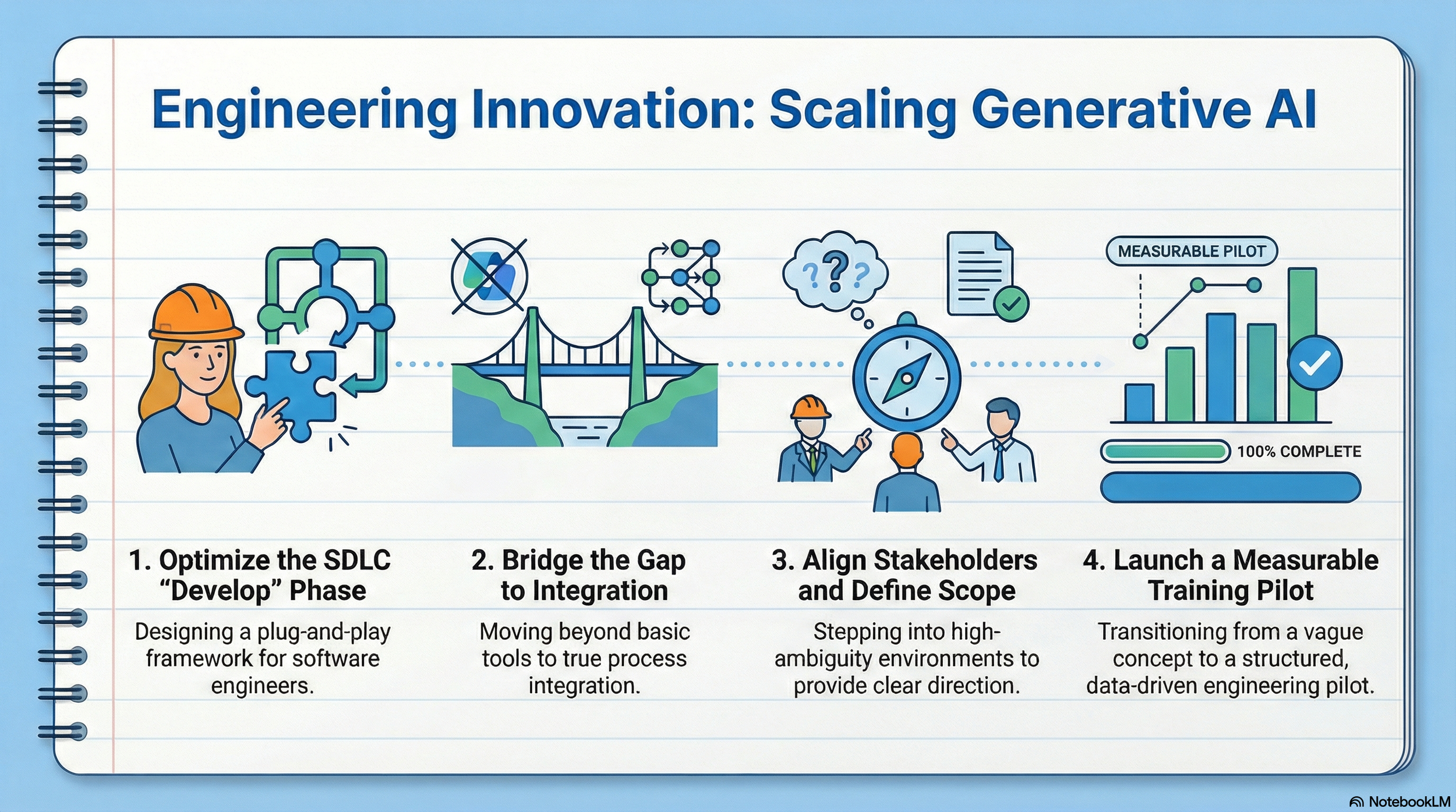
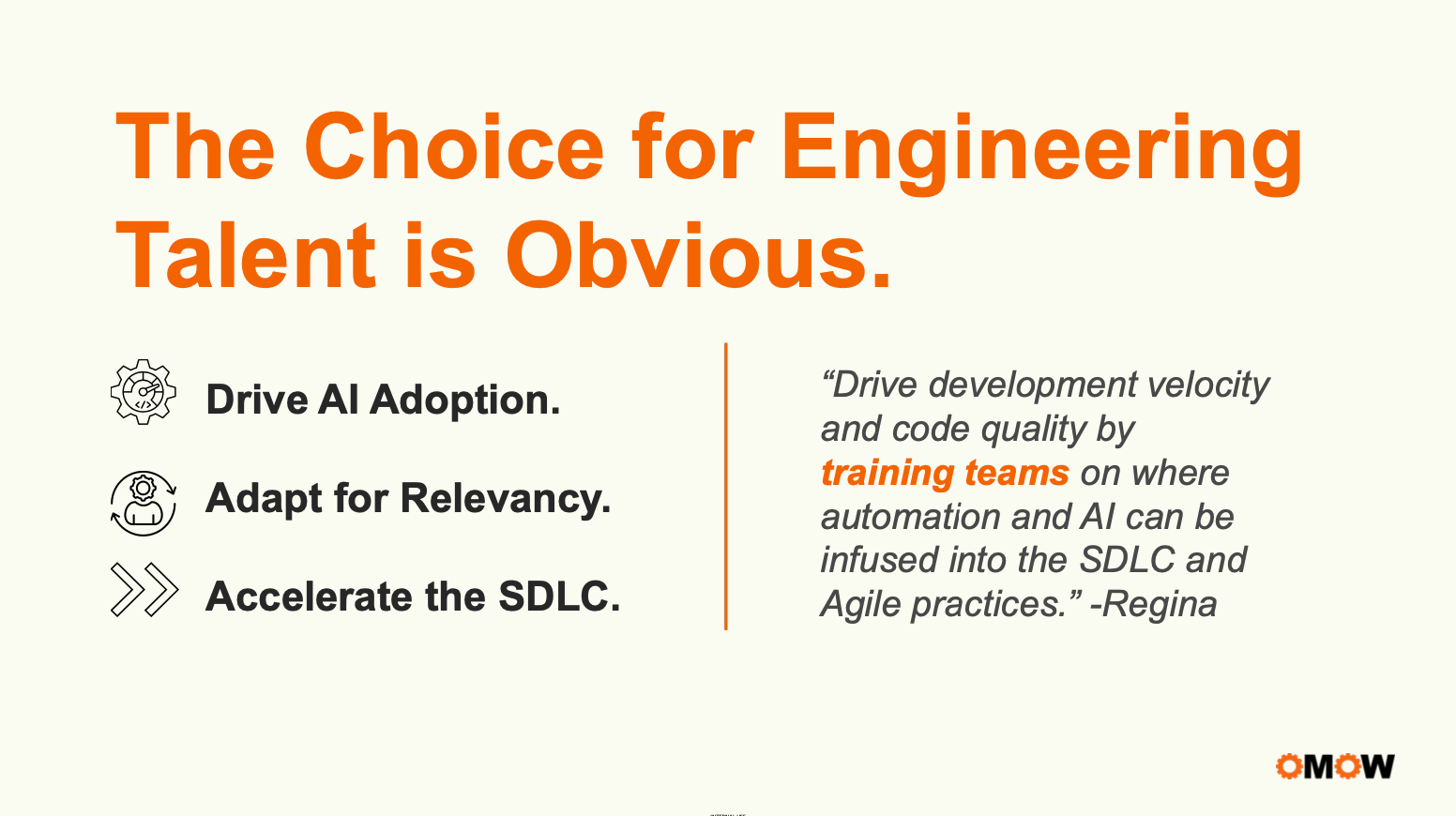
Objective: Optimize the “Develop” phase of the SDLC by designing a plug and play, scalable AI-integrated framework and training for software engineers.
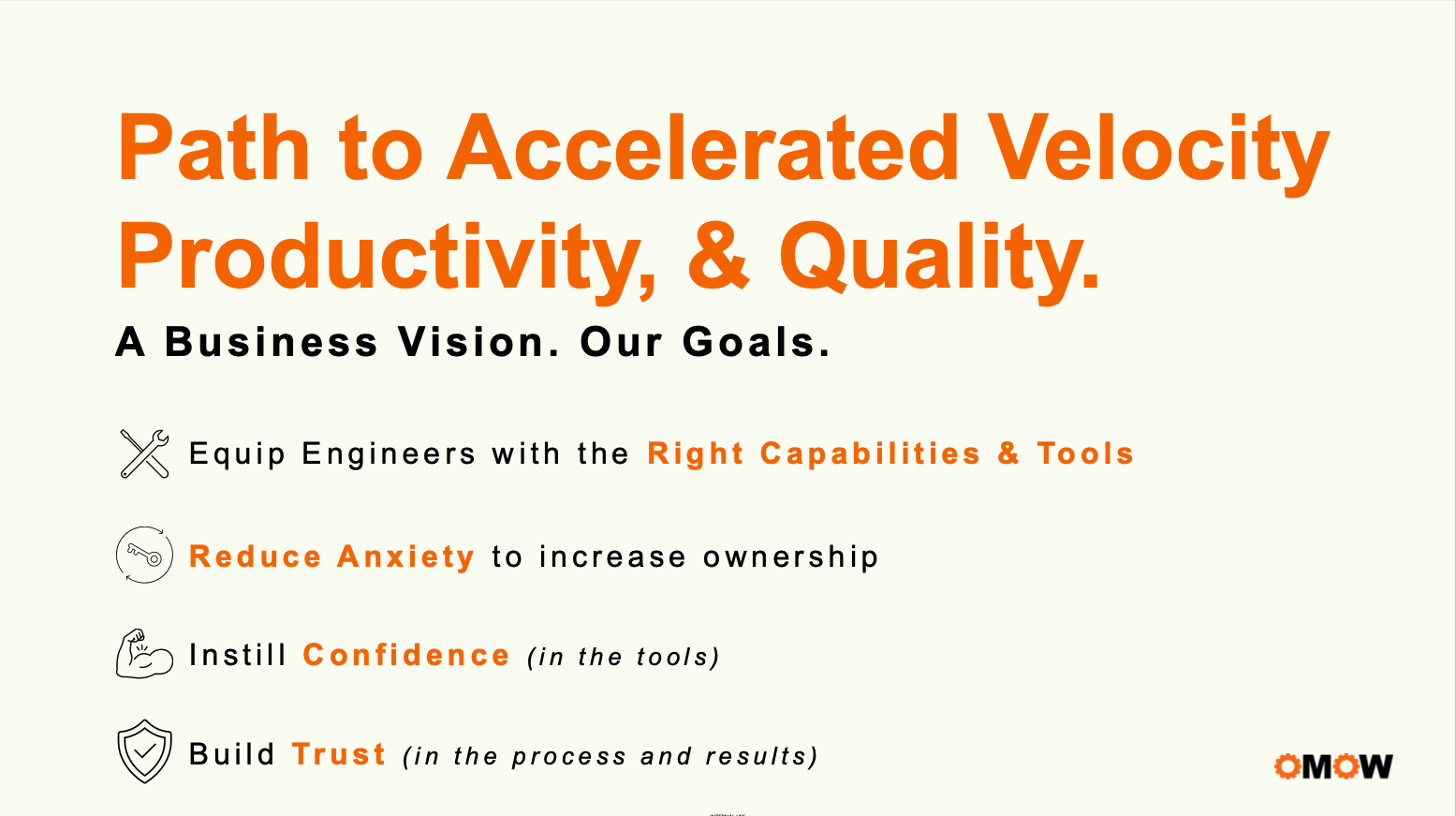
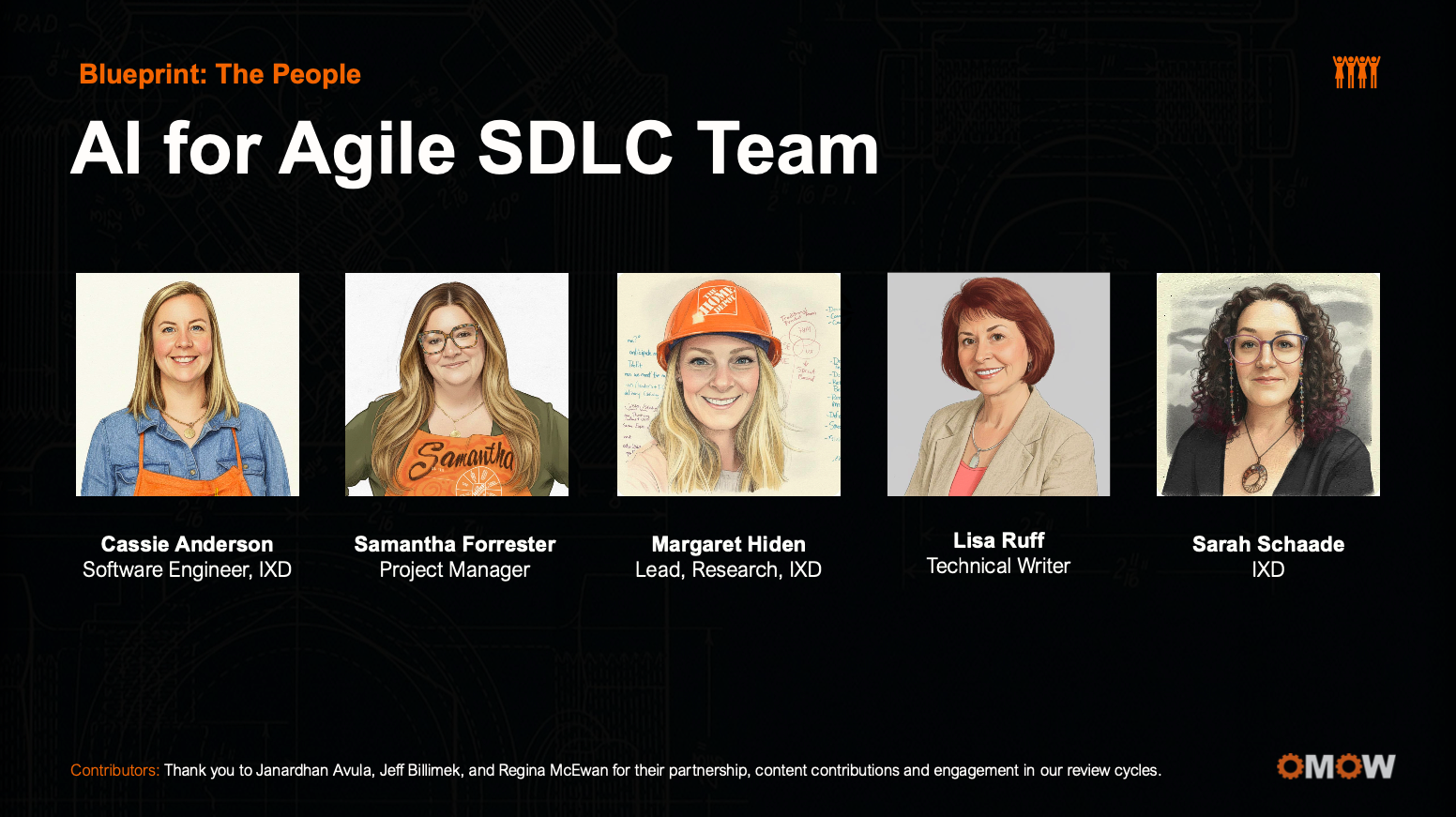
The Challenge: In a rapidly evolving landscape of Generative AI, our software engineering teams had the tools (GitHub Copilot) but lacked a roadmap for true integration. I stepped into a high ambiguity environment where a pilot for AI-assisted development was stalled and with a cross-functional team of designers, a content strategist and project manager were awaiting direction. I led the effort to define scope, align stakeholders, and move from a vague concept to a measurable pilot.
The Strategy
Stakeholder Alignment
Identified a gap in domain expertise within our internal team and successfully built the case to pivot internal headcount, securing a Staff Software Engineer who was new to instructional design. This ensured the solution’s technical integrity. I coached our new teammate on design thinking and instructional strategy, upskilling the team while developing and delivering the product.
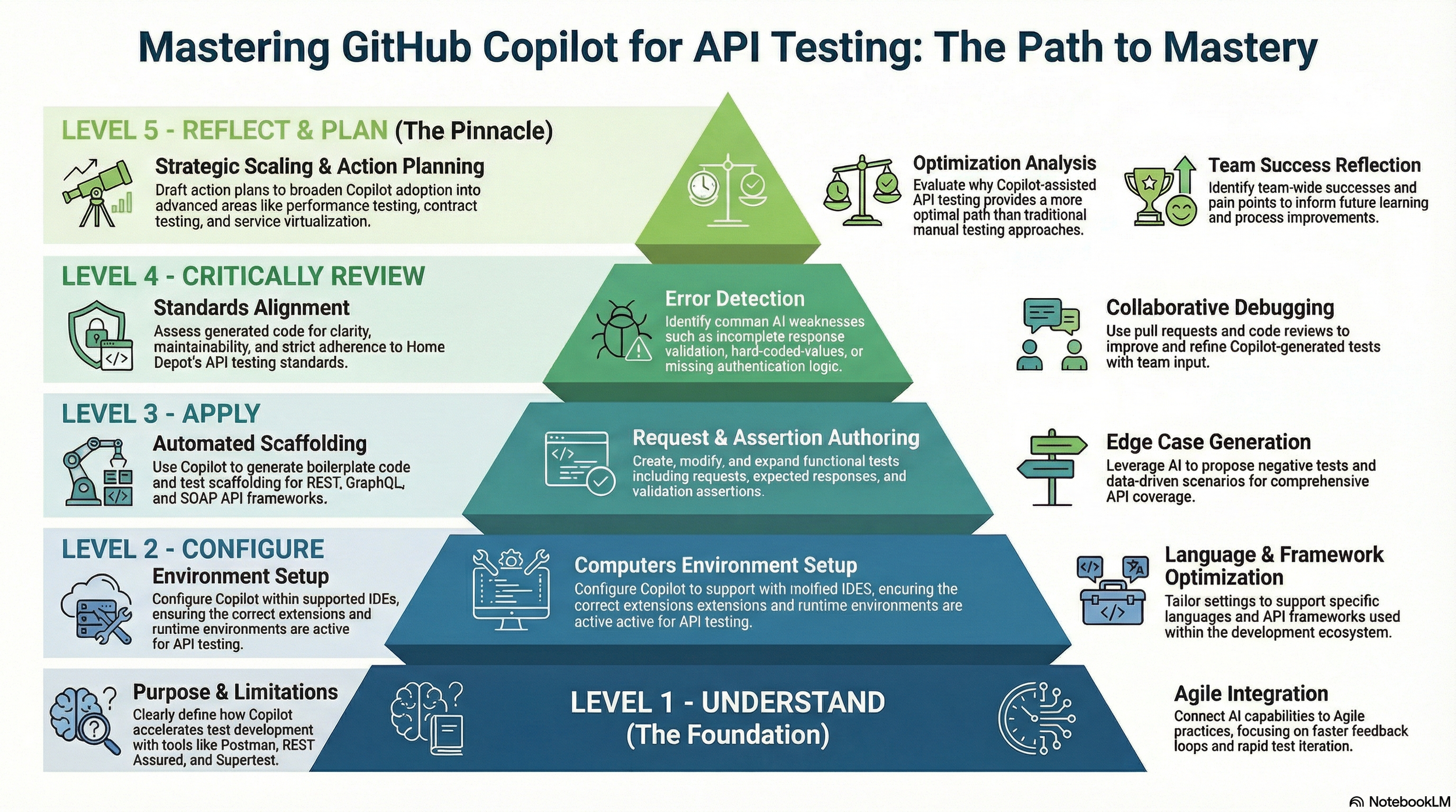
Ran collaborative workshops with Software Engineering leaders to map “Jobs to be Done” during the development phase of the SDLC. This allowed us to identify and prioritize the most impactful use cases for AI tooling integration into the reality of an engineer’s workflow. The scope covered feature writing, debugging, unit testing, code review, refactoring, to a variety of testing types.
Resource Advocacy & Coaching
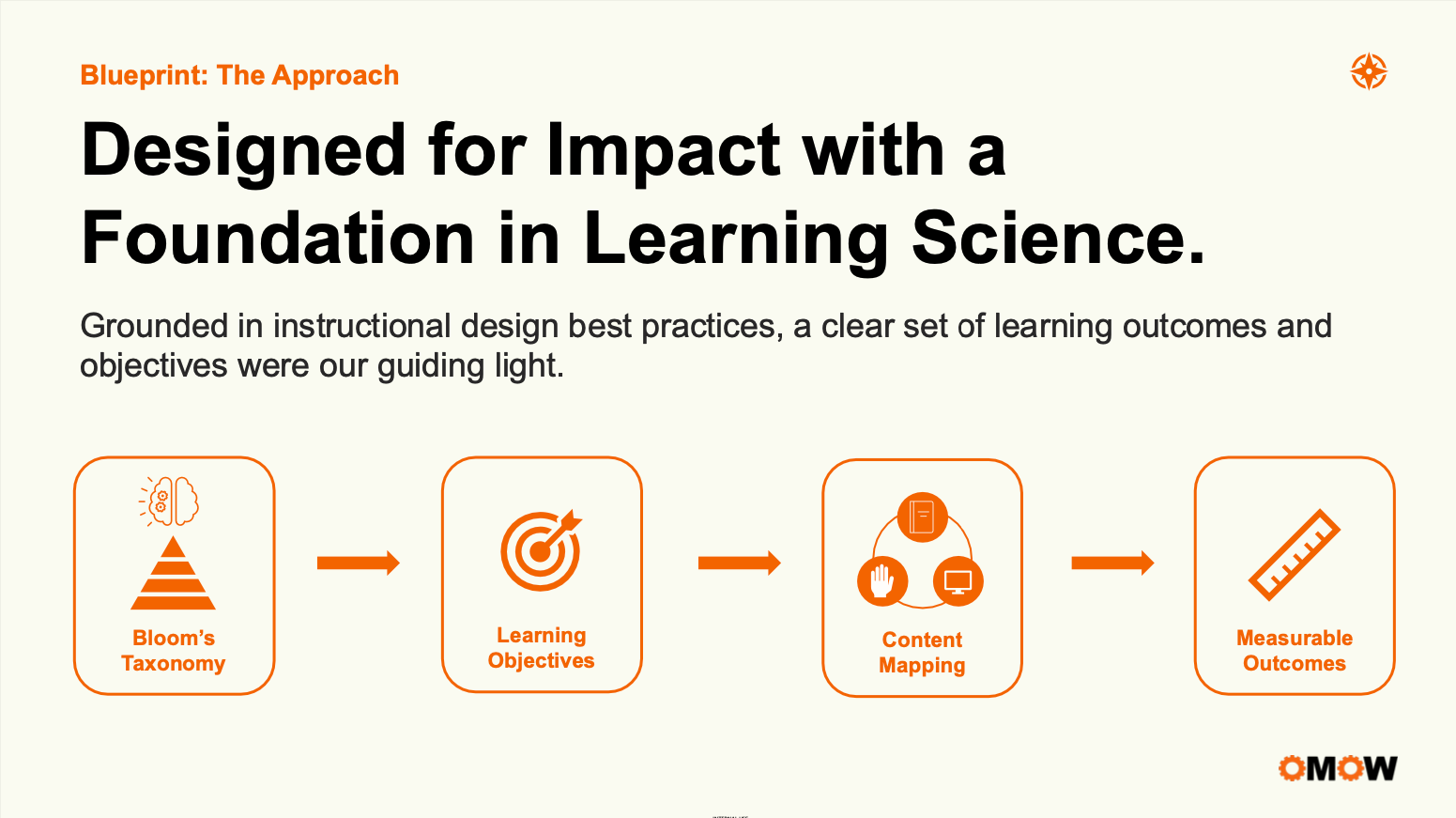
Learning Outcomes & Objectives Mapping
I used Bloom’s taxonomy as a UX framework to define the hierarchy of outcomes and objectives-from basic code writing to complex systems integration. Not being a SME in coding or development, I leveraged Glean, an AI-powered enterprise search and workplace assistant platform, to fill in the gaps. The documentation of outcome and objectives were put through an agile review cycle by our engineering partners. These set up our designers for success, with every pivot.
Innovation
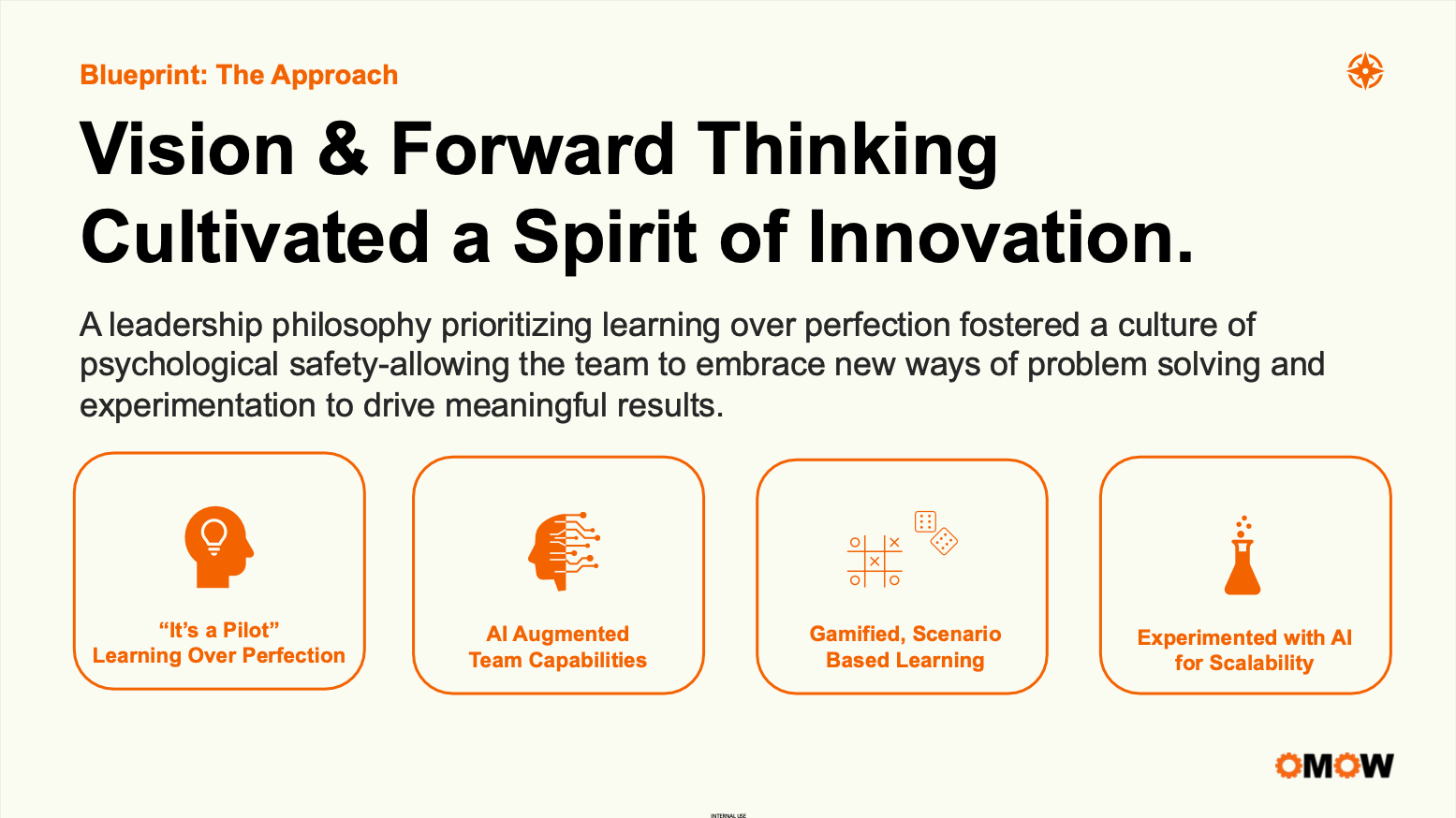
Not only were we equipping our partners to win at AI-assisted development, our own team leveraged GenAI tools (GitHub Copilot, Glean, Gemini, Miro, Microsoft Copilot) to accelerate execution to delivery. I prioritized learning over perfection and created a psychologically safe space to embrace new ways of problem solving to drive results. This resulted in the incorporation of gamified, scenario-based learning (an entire module dedicated to an escape room for Building Deployable Artifacts with Docker) and other experimentation to explore new modalities of learning.
Measurement & Impact
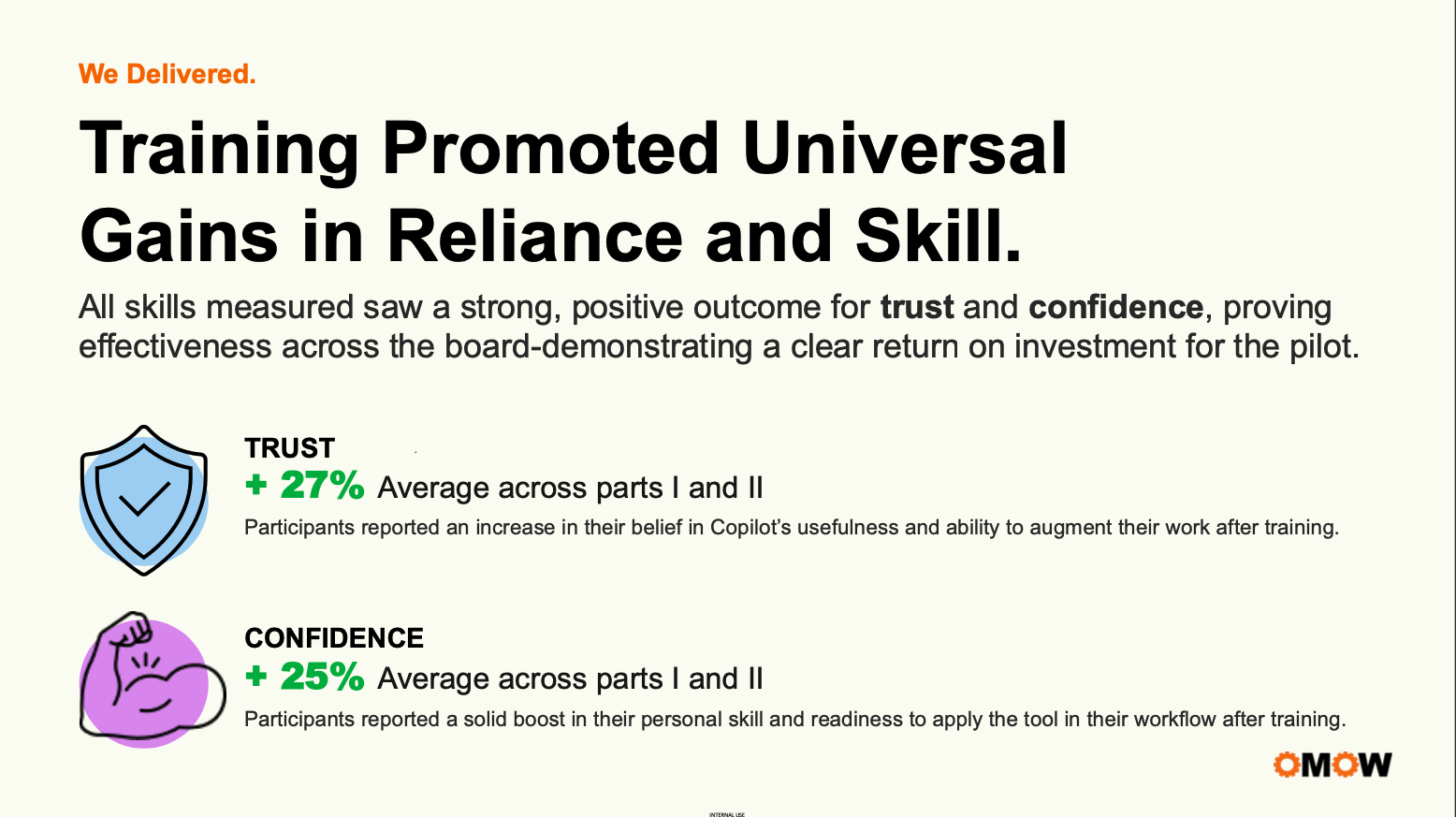
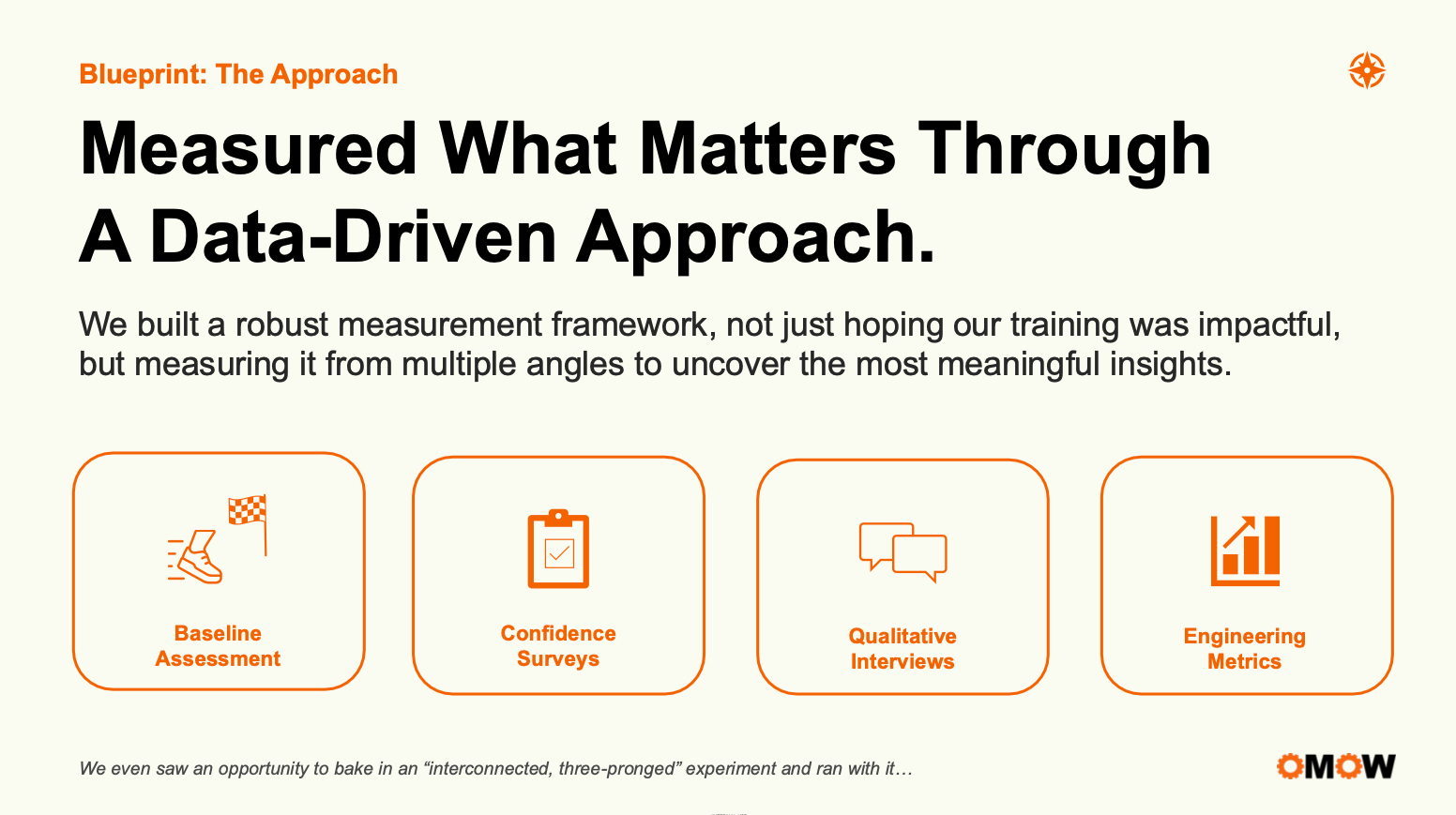
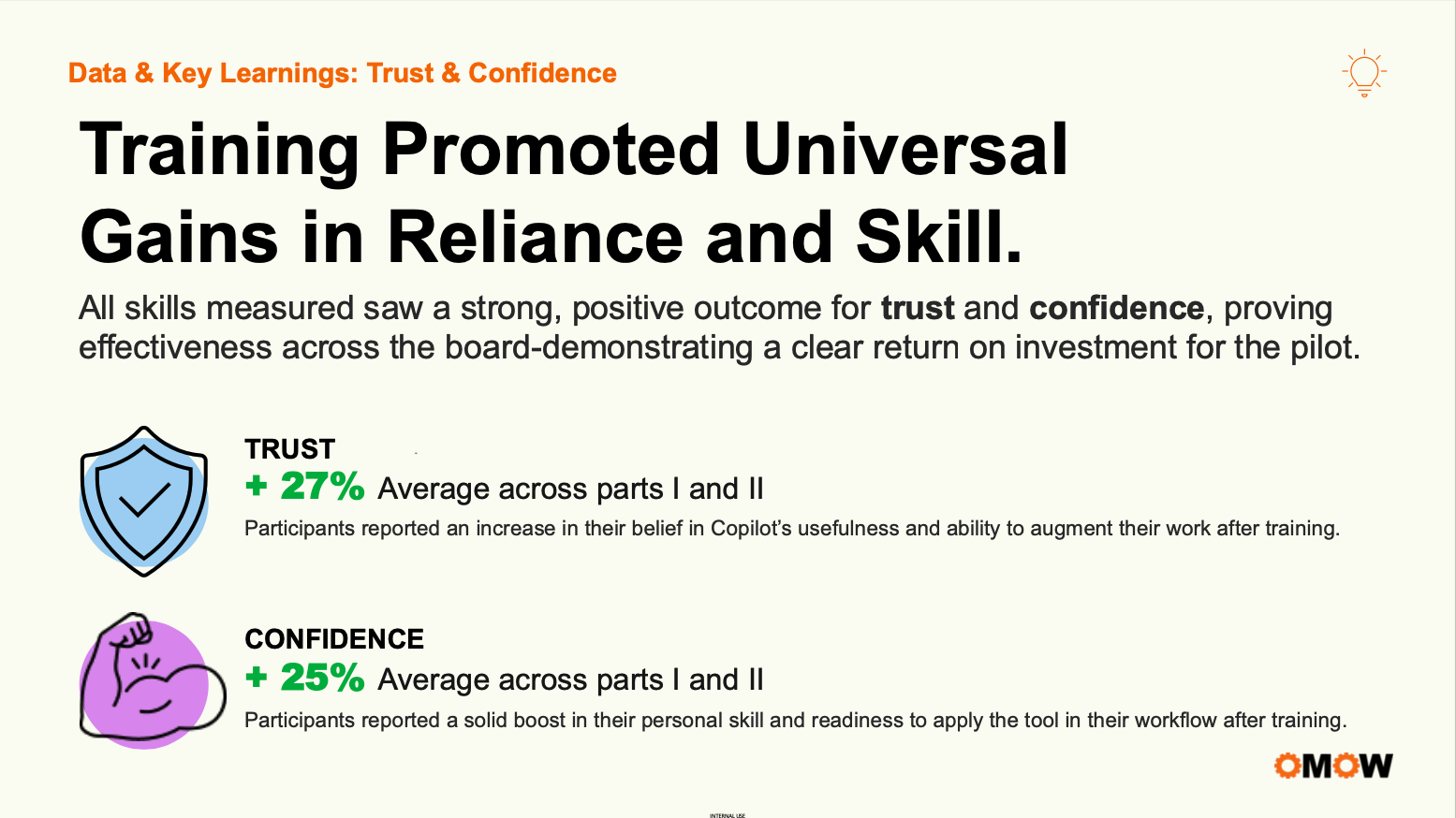
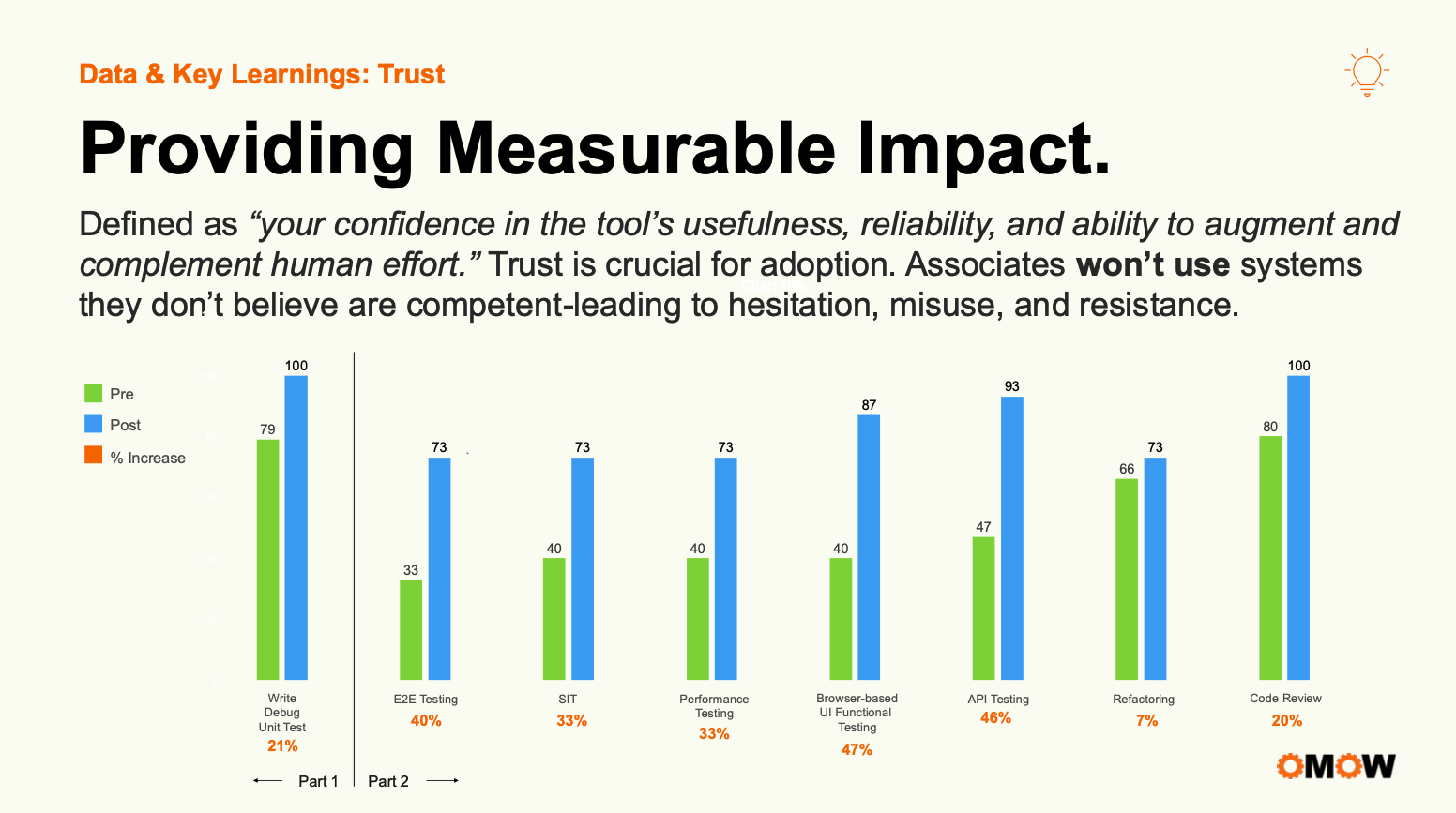
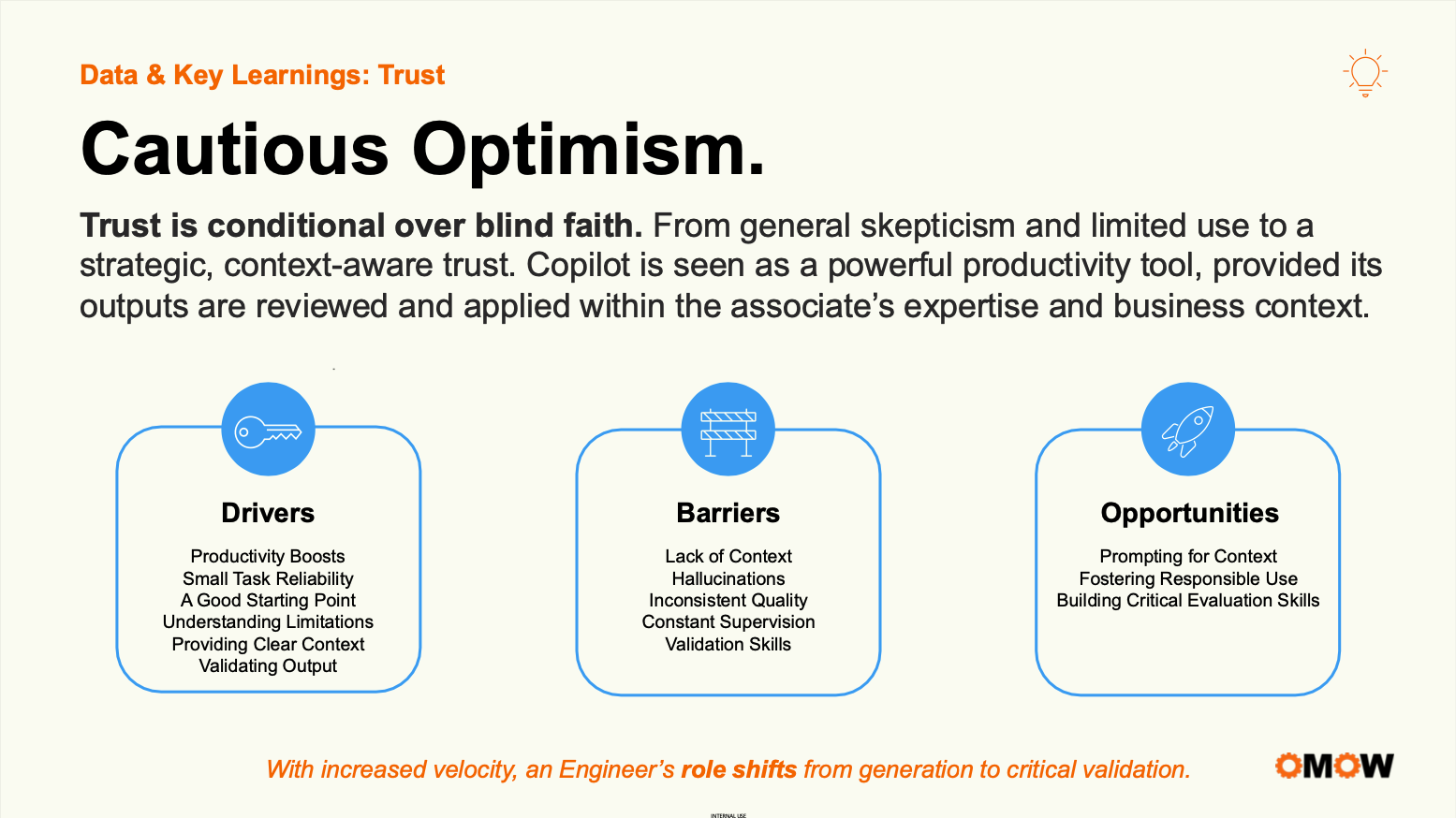
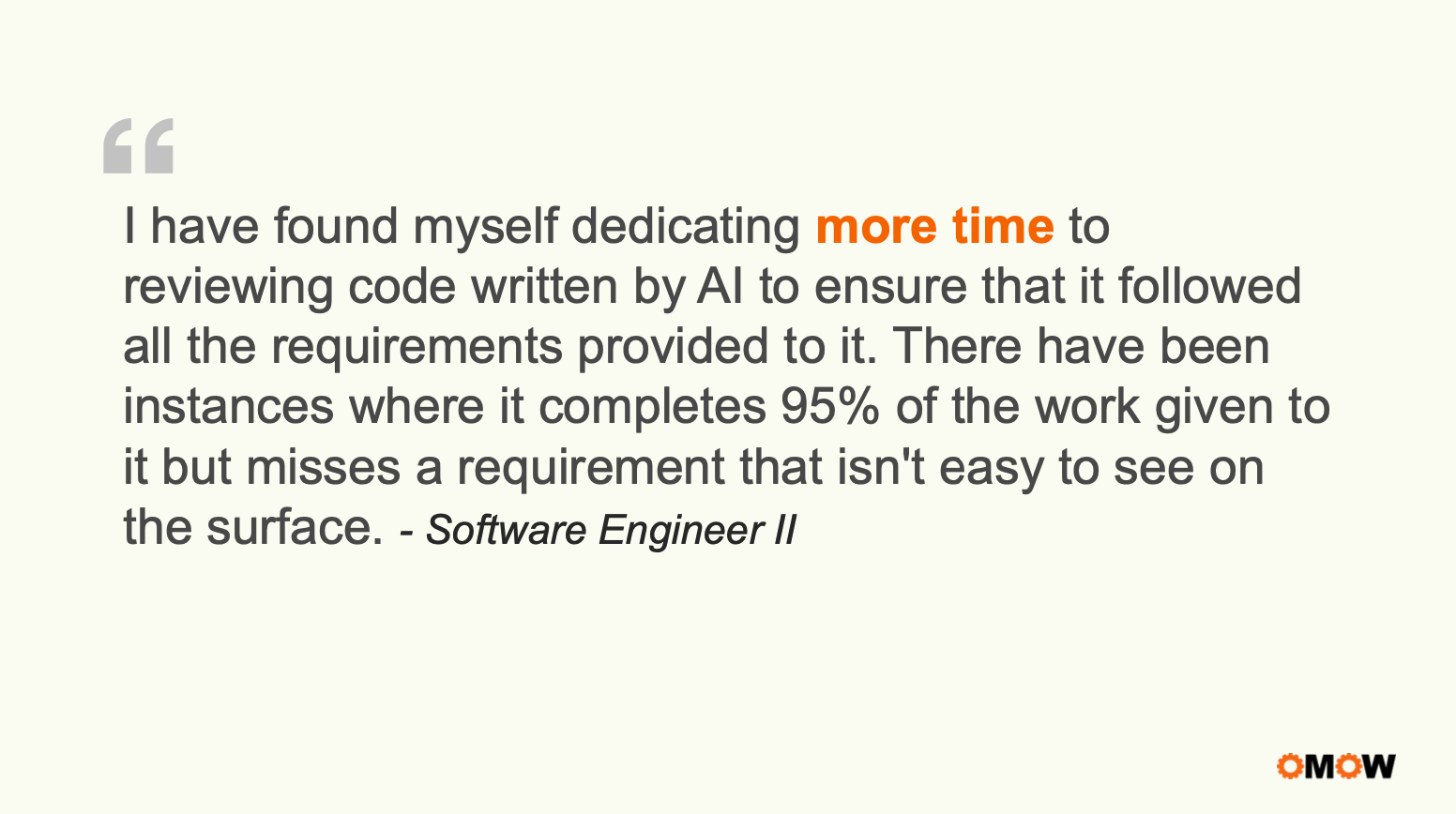
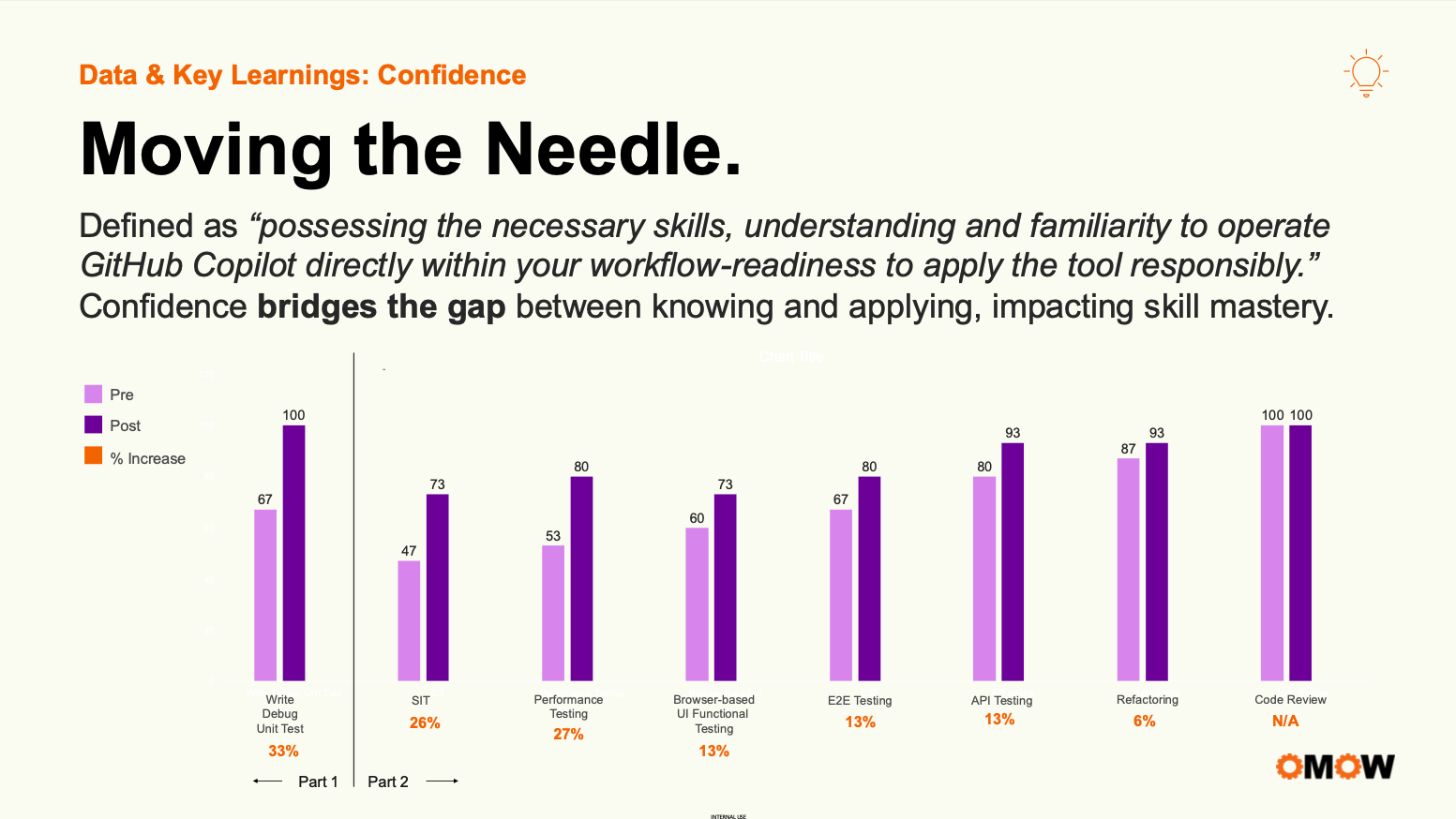
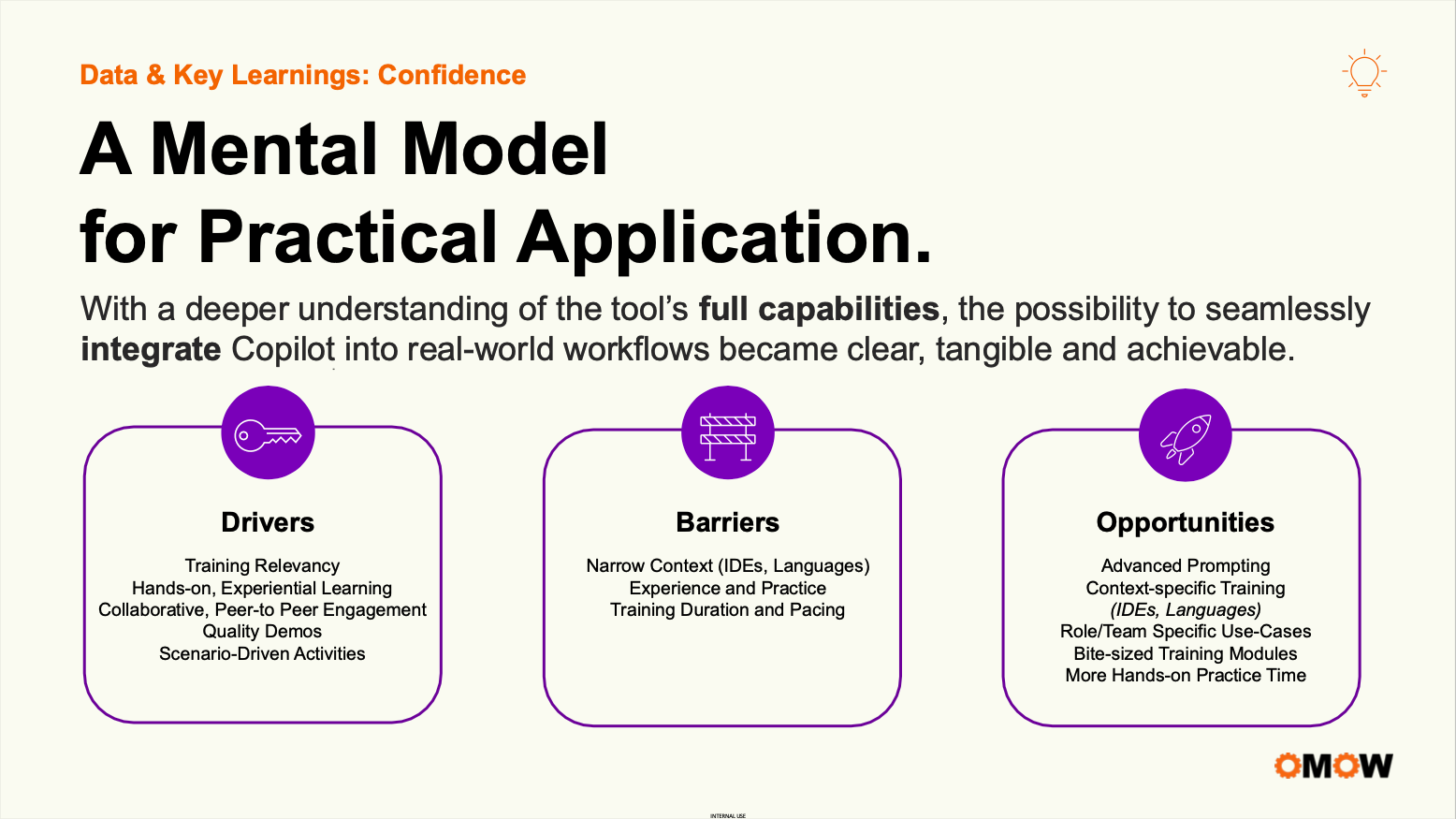
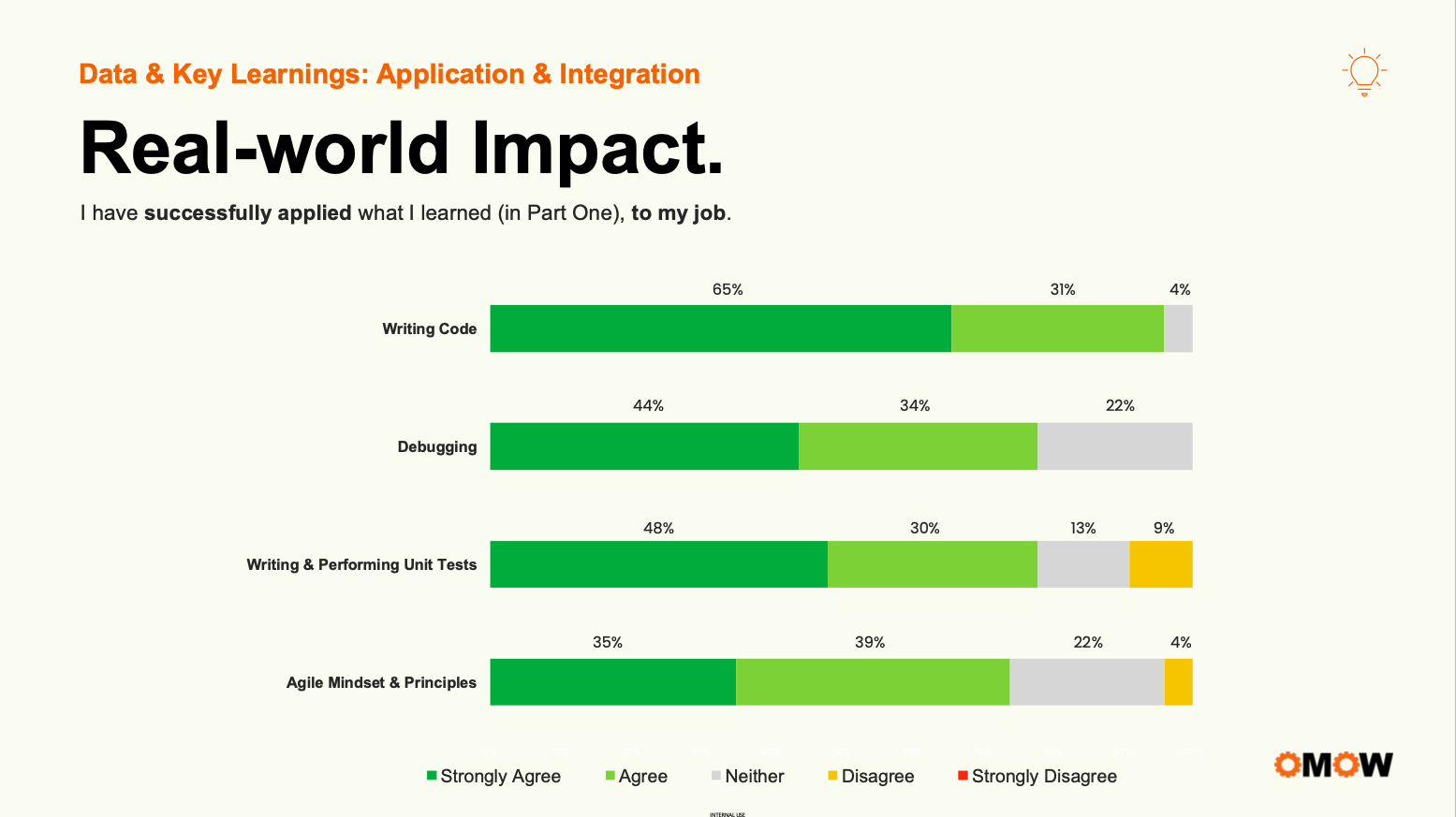
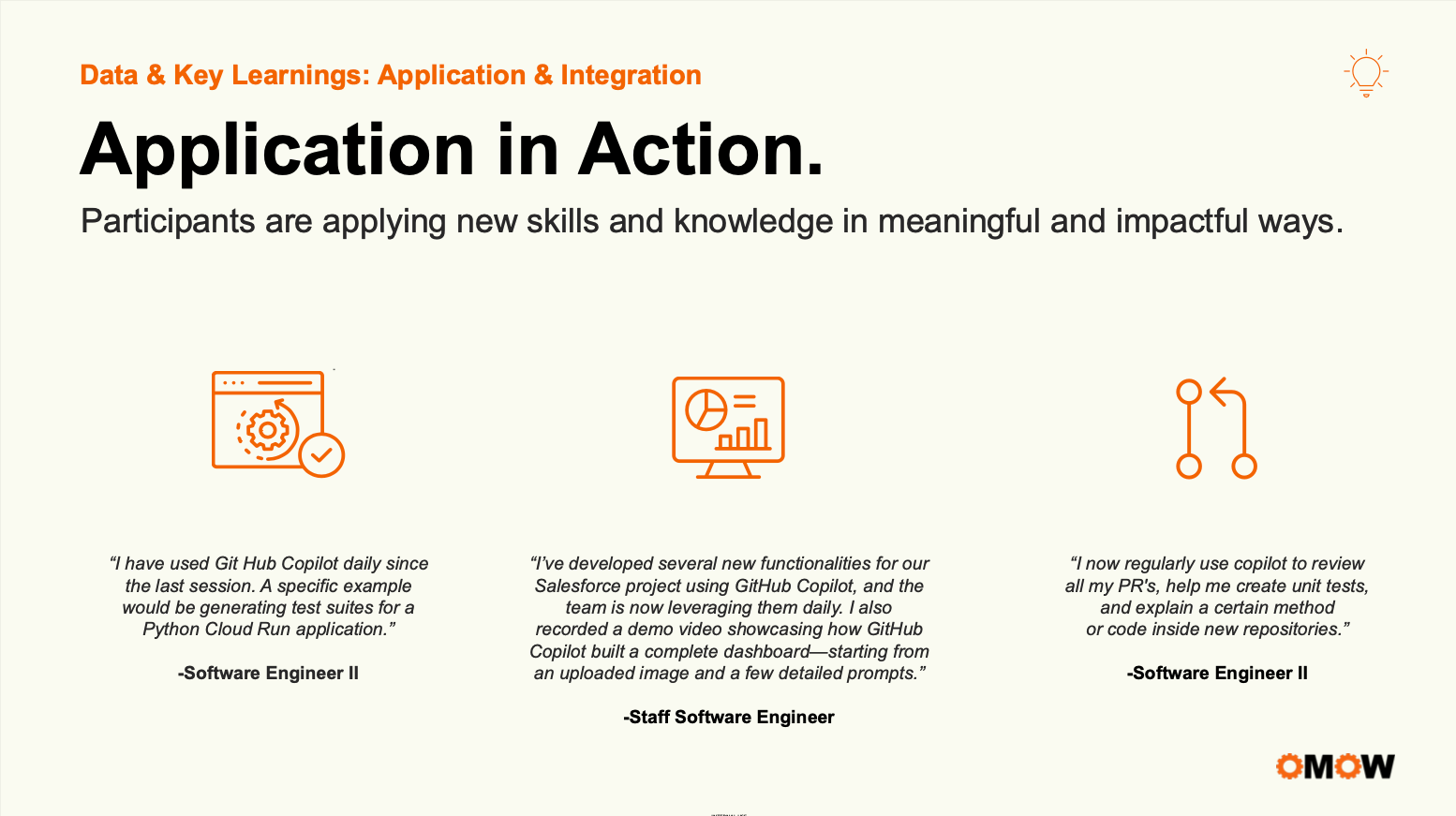
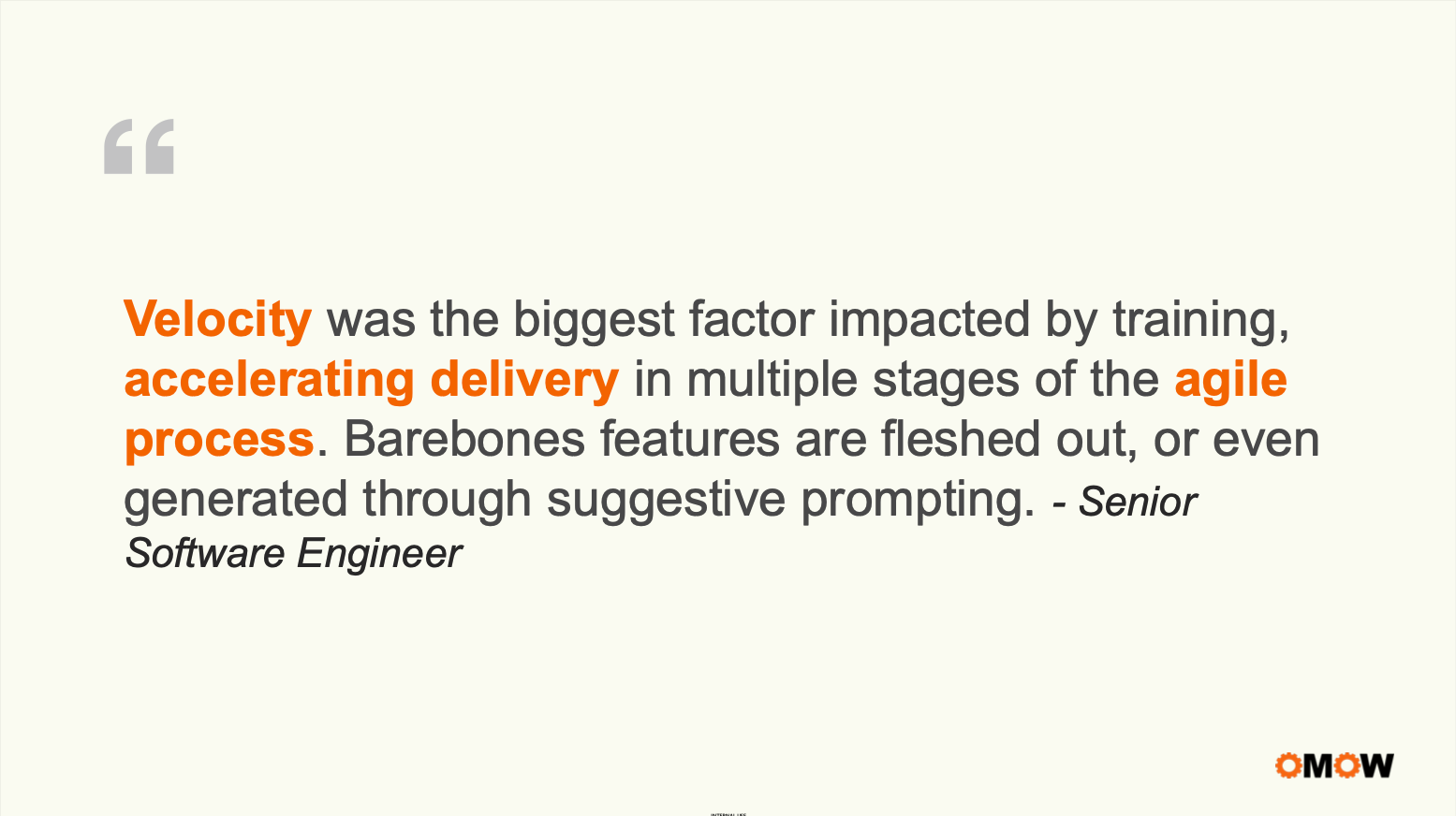
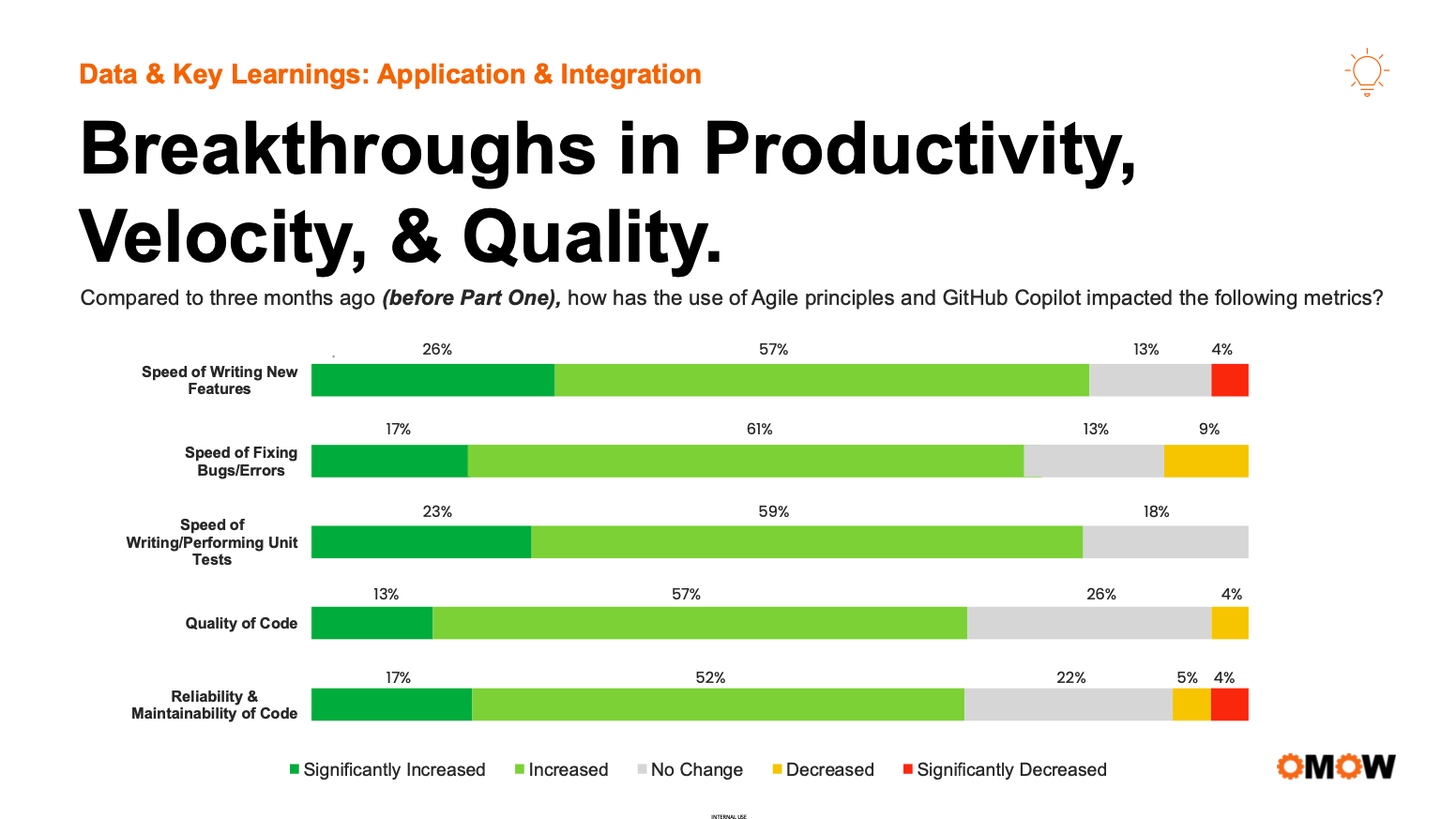
I designed a rigorous feedback ecosystem to track the shift in participant sentiment and technical mastery. Through a mix of pre and post assessment comparison data, 1:1 interviews, and a 90-day integration and impact survey, I triangulated the data to measure sentiment, trust, and performance for core engineering pillars such as unit testing and feature writing. Transforming raw feedback into actionable insights, provided evidence for confident decision-making by leadership. The readout of these results, seen below, drove a strategic pivot for leadership, shifting ownership of full rollout from an external consultancy to our in-house team.
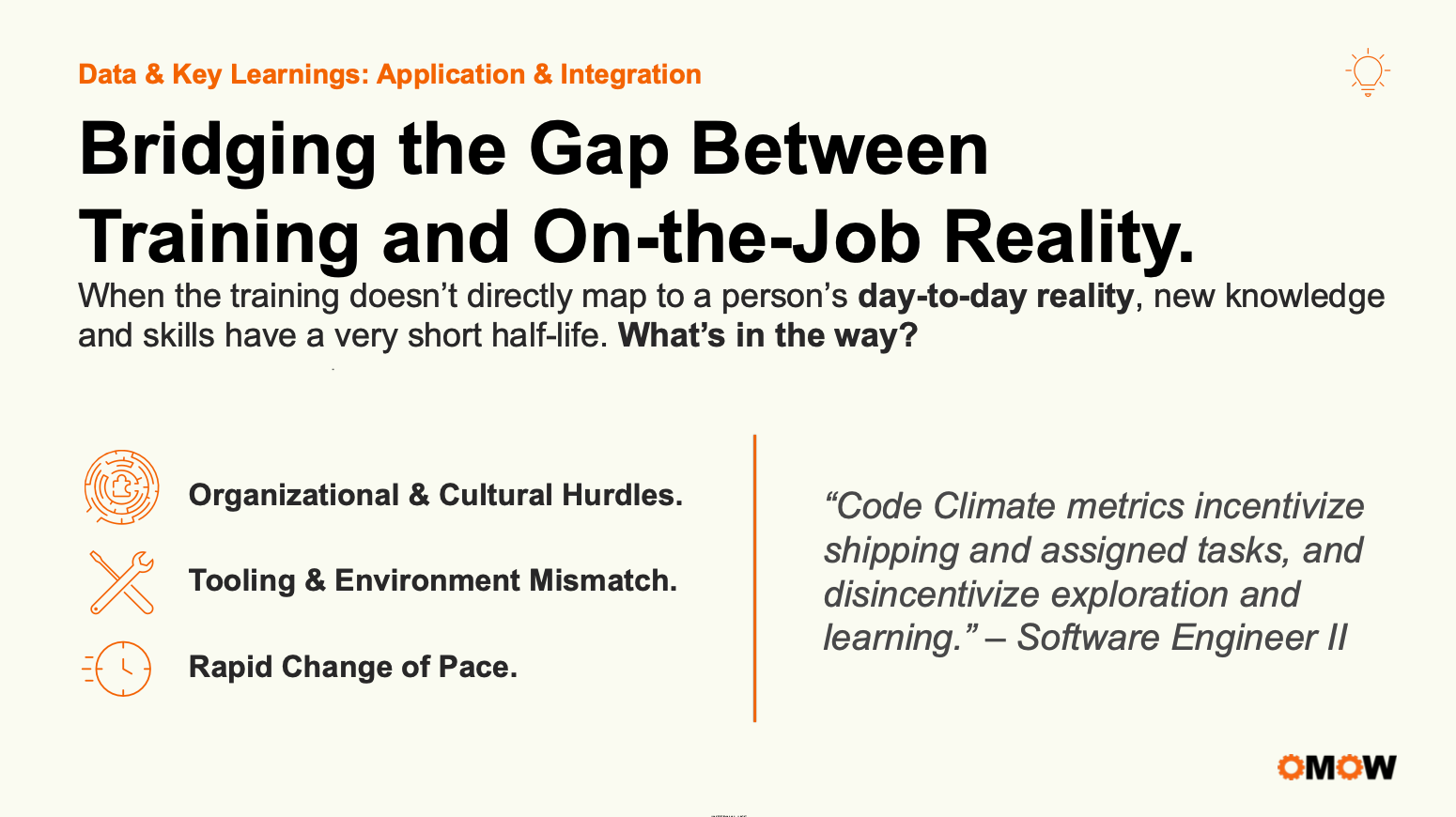
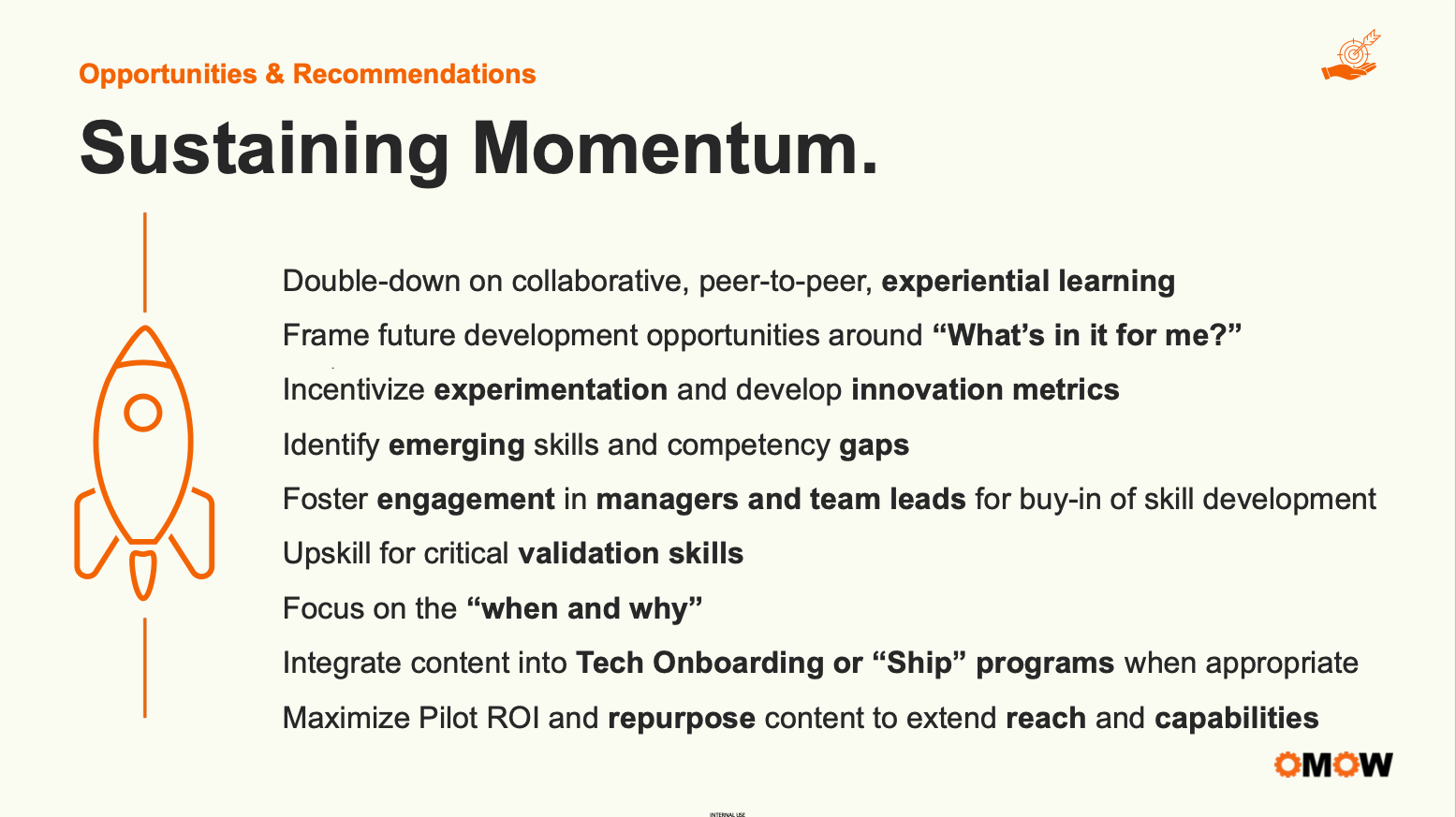
Lessons Learned: Challenges and Recommendation for Tracking Developer Metrics
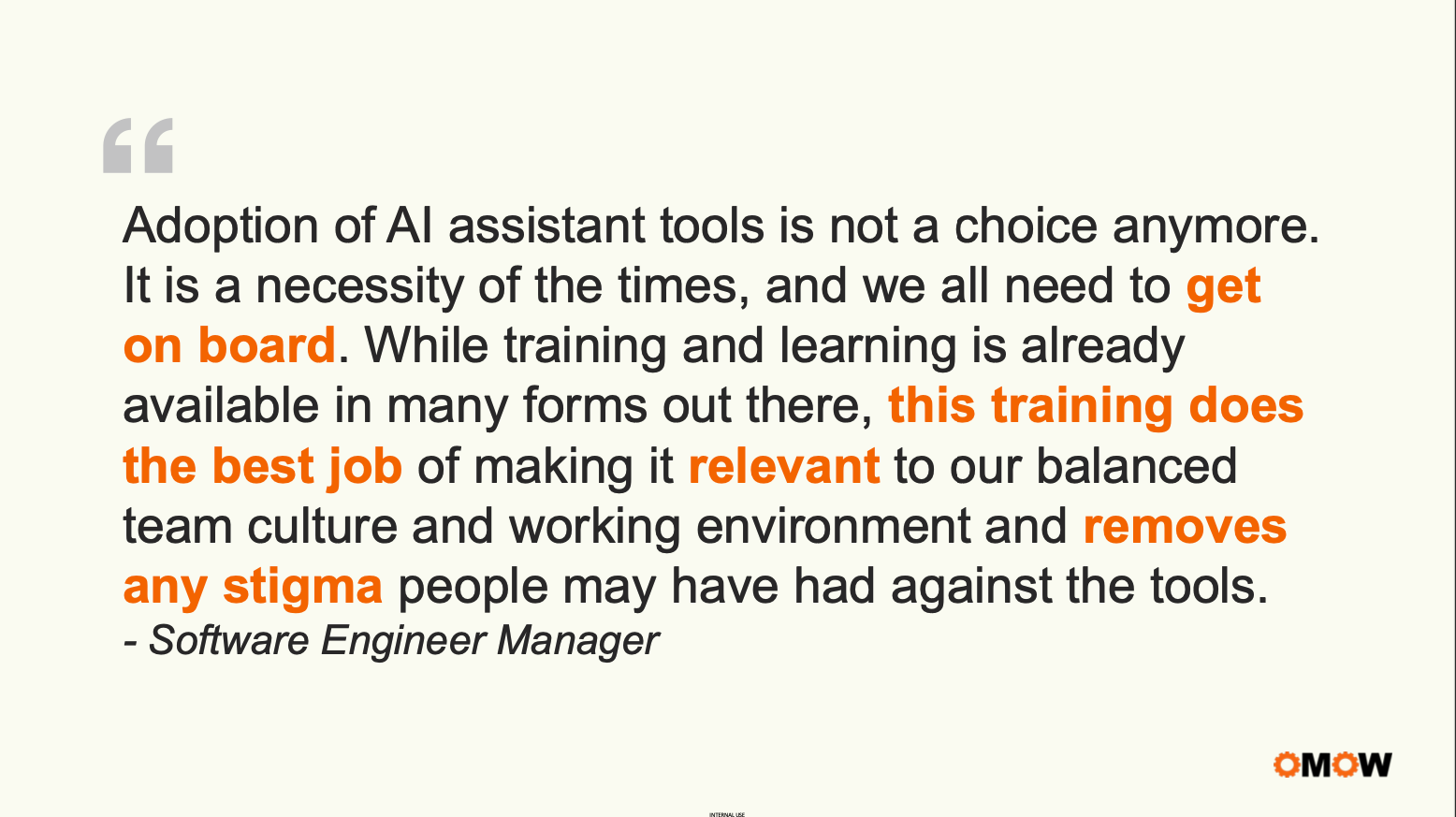
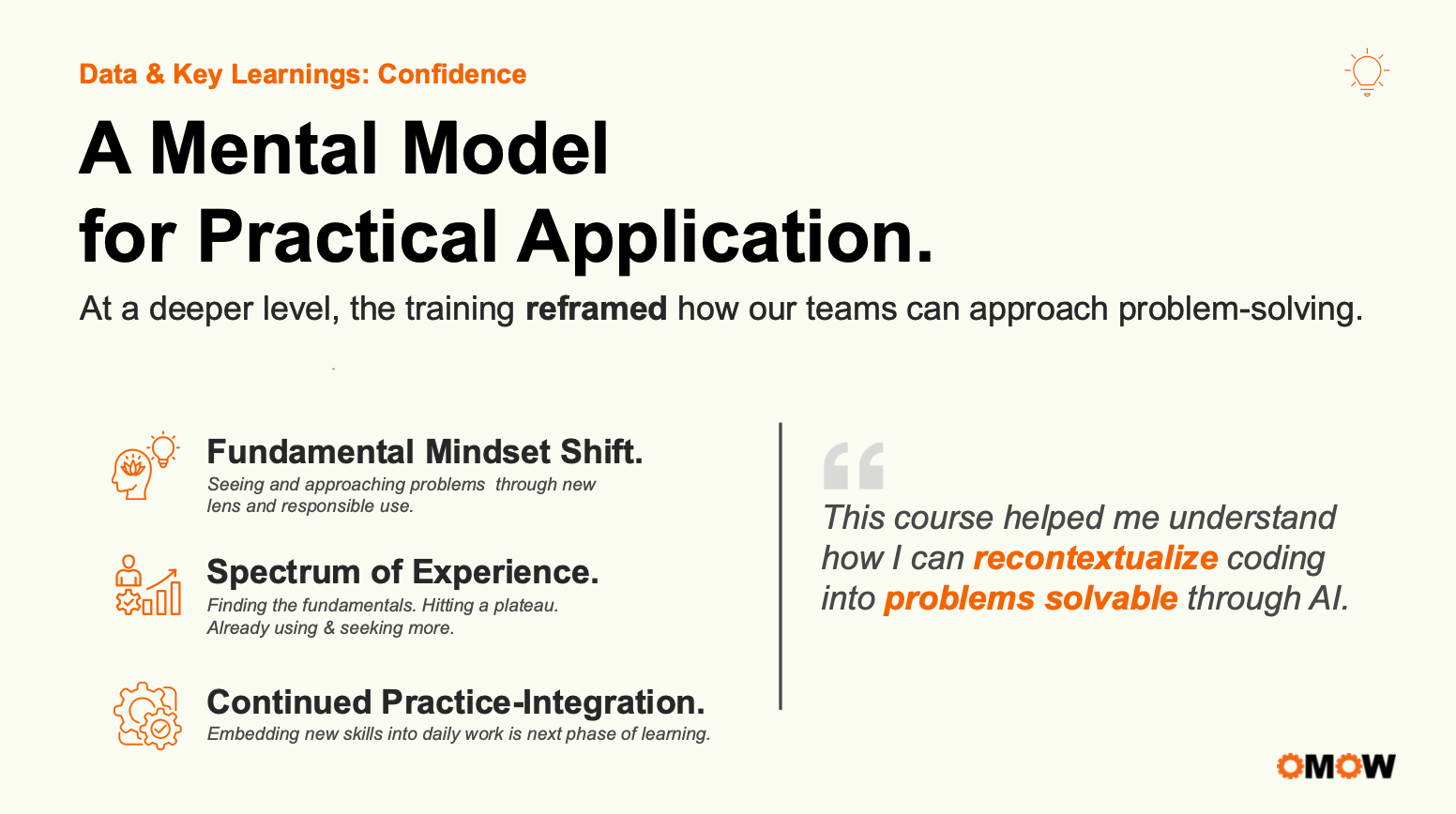
“This course helped me understand how I can re-contextualize coding into problems solvable through AI.”
- Staff Software Engineer
Takeaways & Lessons Learned
Leading Through Influence.
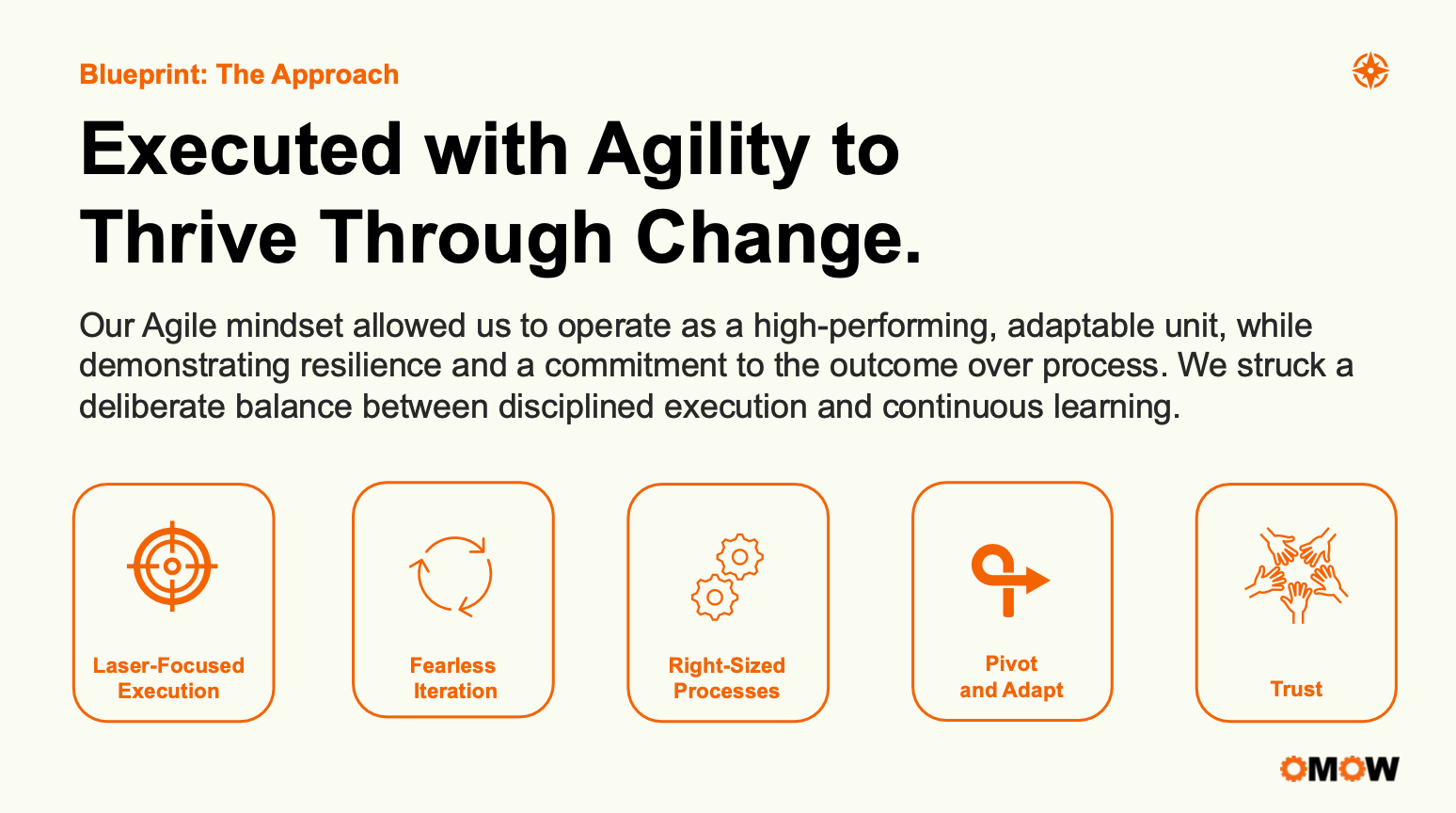
Navigating the ambiguity of disruptive tech requires more than just a solid project plan; it requires guiding a team through the emotional ups and downs of change. From coaching a new Staff Software Engineer through her first contribution on our team, to shielding the team’s morale during executive pivots, my focus was on cultivating an environment where people felt secure enough to take risks, challenge the status quo, while keeping execution motivation and momentum. The following takeaways reflect how I prioritize human resilience and psychological safety as the primary drivers of agile, high-impact execution.
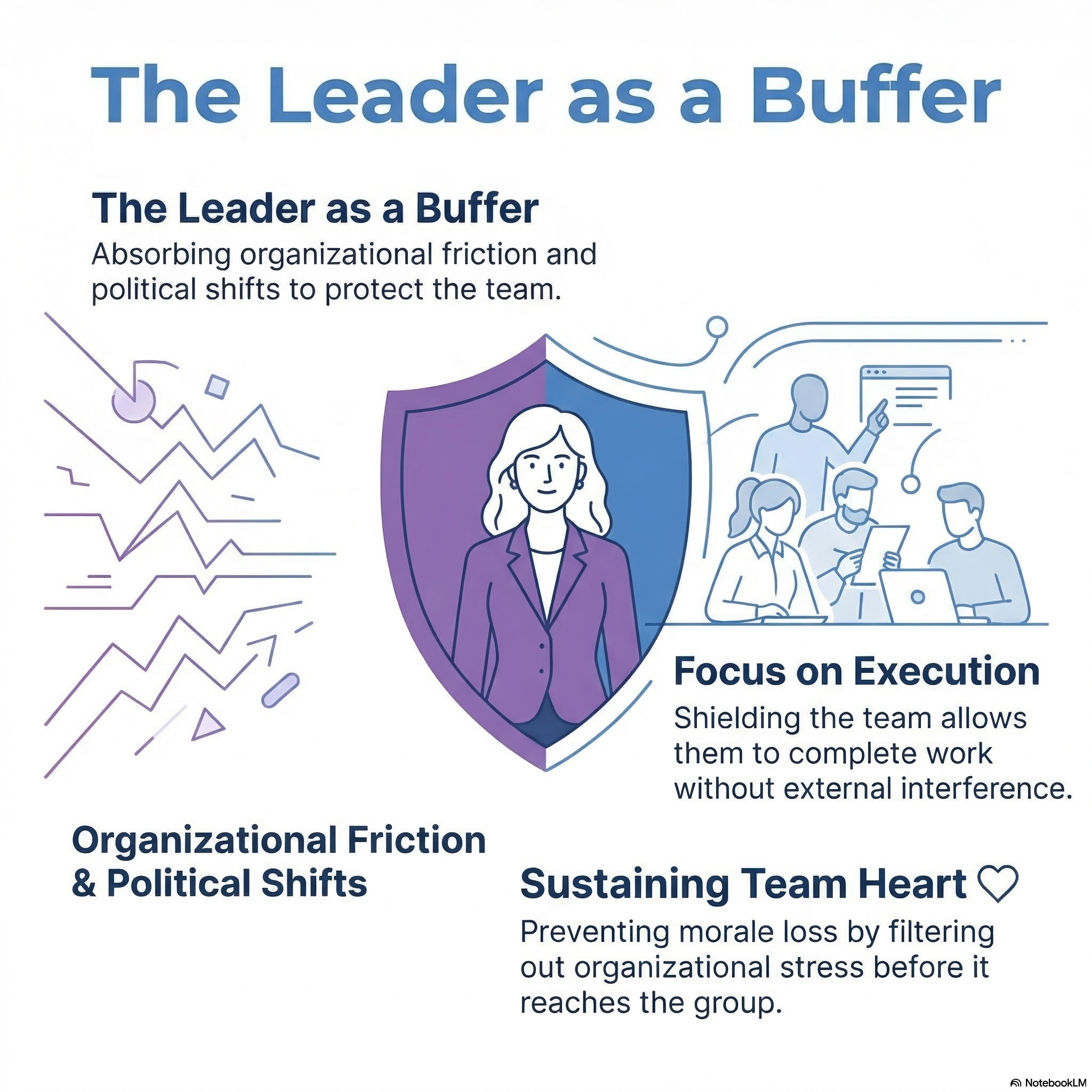
The Lesson: A leader’s job is often to act as a buffer, absorbing organizational friction and political shifts so the team can focus on execution without losing heart.
The Context: Midway through the pilot, leadership announced we would not own the full-scale rollout. The team was crushed, feeling their intense effort was being devalued. I realized my immediate priority wasn't just the project timeline, but their mental headspace. I intentionally kept difficult, contextual negotiations with leadership behind closed doors to protect the team's morale. To keep spirits high, I promised them their excellence would not go unseen, designing our final readout to deliberately spotlight their individual contributions and subject matter expertise.
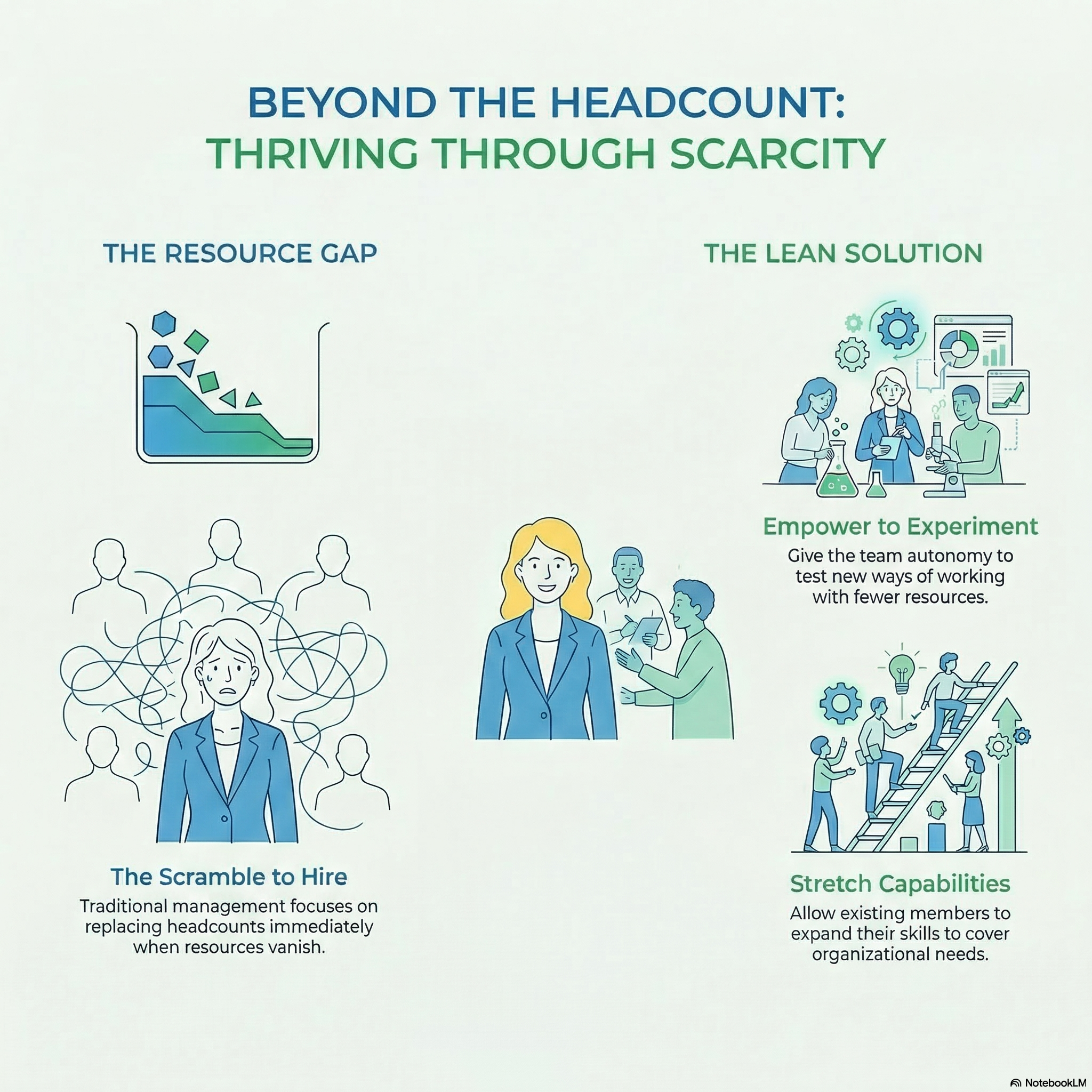
The Lesson: When resources vanish, empowering your team to stretch their capabilities is more effective than scrambling to replace a headcount.
The Context: When we unexpectedly lost our technical subject matter expert, it could have derailed the technical content delivery. Instead of panicking, I used it as an opportunity to encourage my team to take risks and try new things. I created a safe space for a designer to experiment with various AI tools to fill those content gaps. Giving her the room to learn from failure and iterate not only boosted her confidence immensely, but it kept our process lean, agile, and moving forward without missing a beat.
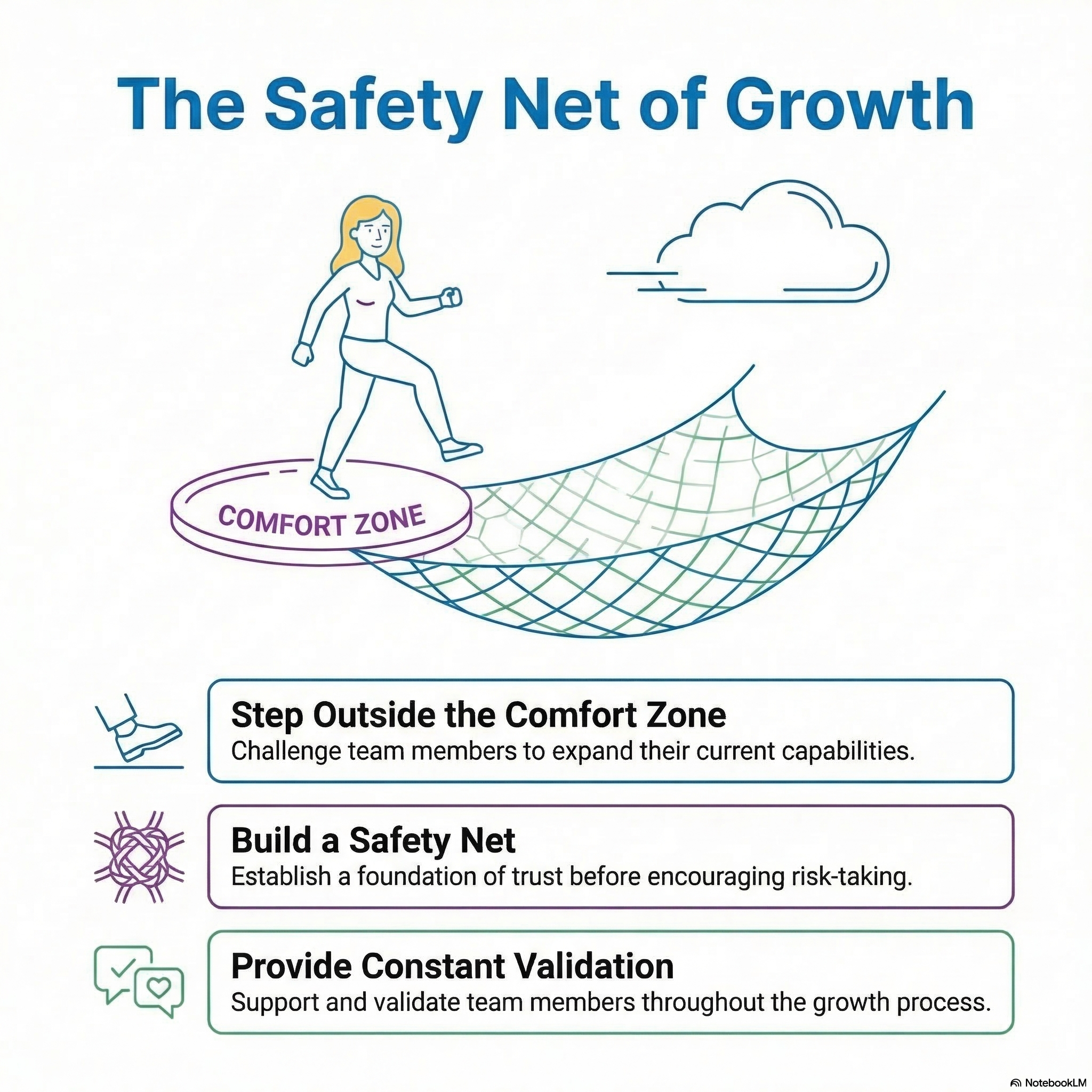
The Lesson: Pushing a team member out of their comfort zone only works if you simultaneously build a safety net of trust and validation around them.
The Context: By pivoting away from external trainers, the responsibility to deliver the technical demonstrations fell to our new Software Engineer, who was incredibly nervous about teaching for the first time. Instead of letting her step back, I pushed her forward. I validated her deep understanding of the nuances she had built, and deliberately framed the pilot as a safe space for her to learn. Seeing her successfully step into that spotlight was a massive win for our team culture and for her confidence and growth.
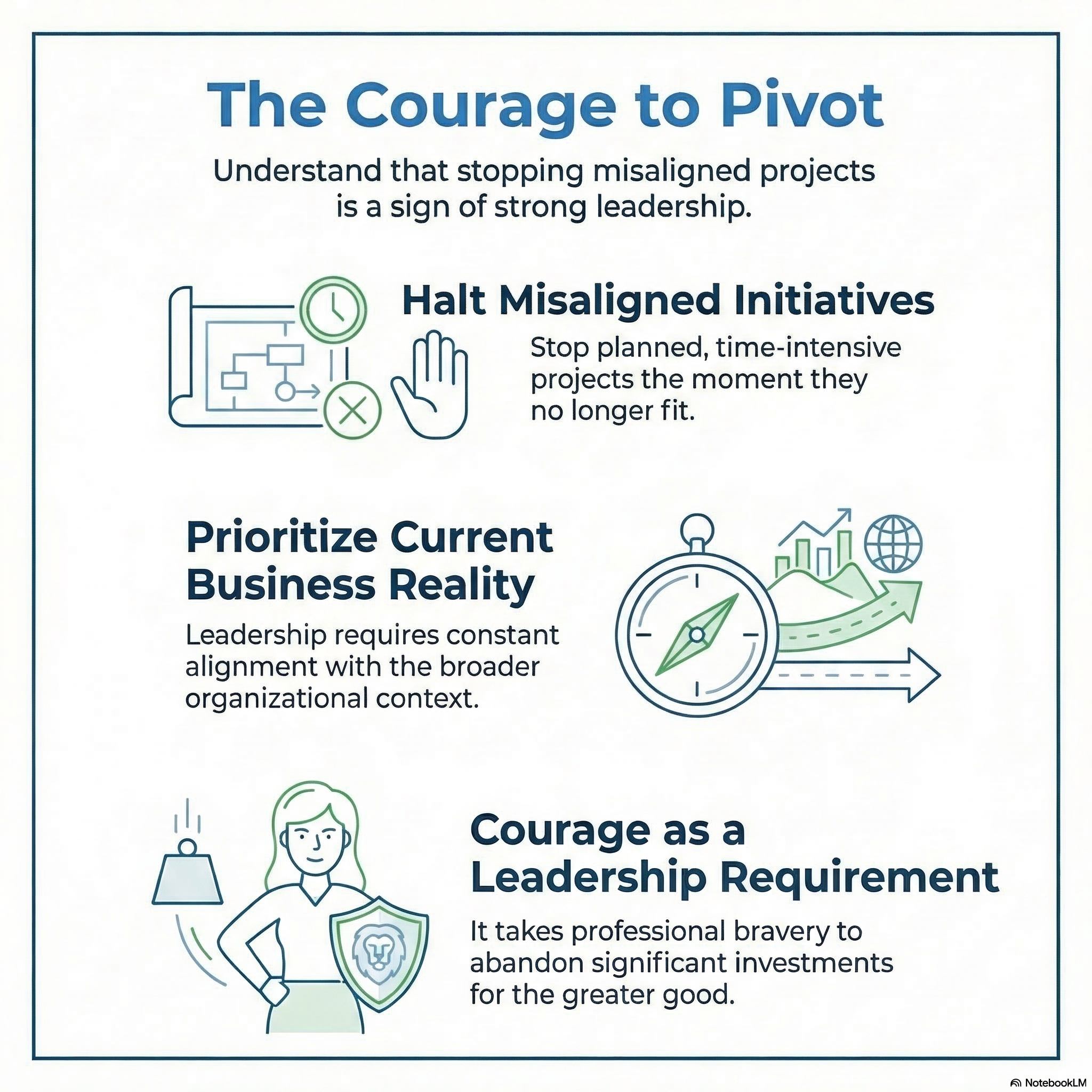
The Lesson: Strong leadership requires the courage to halt planned, time-intensive initiatives the moment they no longer align with the broader business reality.
The Context: We originally planned a massive "train the trainer" effort for phase two, preparing to upskill other instructors for the full-scale rollout. However, the moment leadership temporarily shifted rollout ownership away from us, I immediately made the case to kill the training initiative. Recognizing it as a sunk cost that would waste weeks of effort, I pivoted our strategy to have the core creators deliver the content directly, keeping our team incredibly lean and focused.