Case Study
Line of Sight
Bridging the Gap Between UX Execution and Enterprise Impact at The Home Depot.
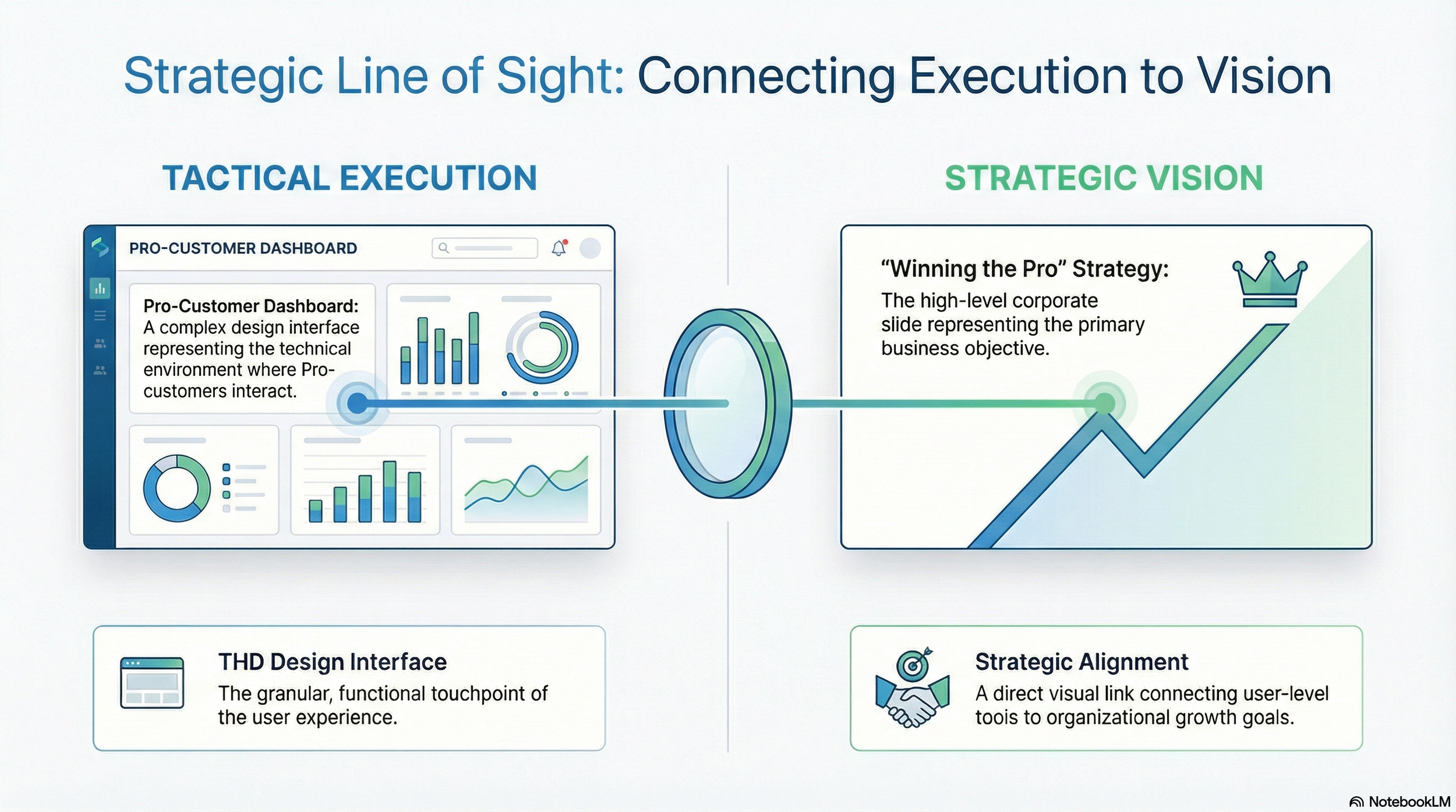
The Challenge
Even the most talented designers can feel like “order takers” when they lose sight of the “why.” At The Home Depot, the Voice of the Associate (VOA) survey revealed a strategic blind spot: Individual Contributors (IC’s) across 16+ Enterprise UX squads struggled to articulate how their daily tasks, research and design work laddered up to the company’s goals. Without this “Line of Sight,” associates couldn’t advocate for the ROI of their work, leading to friction with partners and a cap on UX maturity.
My Role
I was brought in by the VOA Strategy committee to design, facilitate, and scale a program and framework that would empower 200+ Enterprise UX associates (from ICs to Directors) to translate UX output into business impact.
Knowledge Gaps
Is the struggle due to lack of communication from the top? Or a lack of framework at the bottom?
A Bi-Directional Framework
Individual Contributor Outcomes
From UX Speak to Business Value
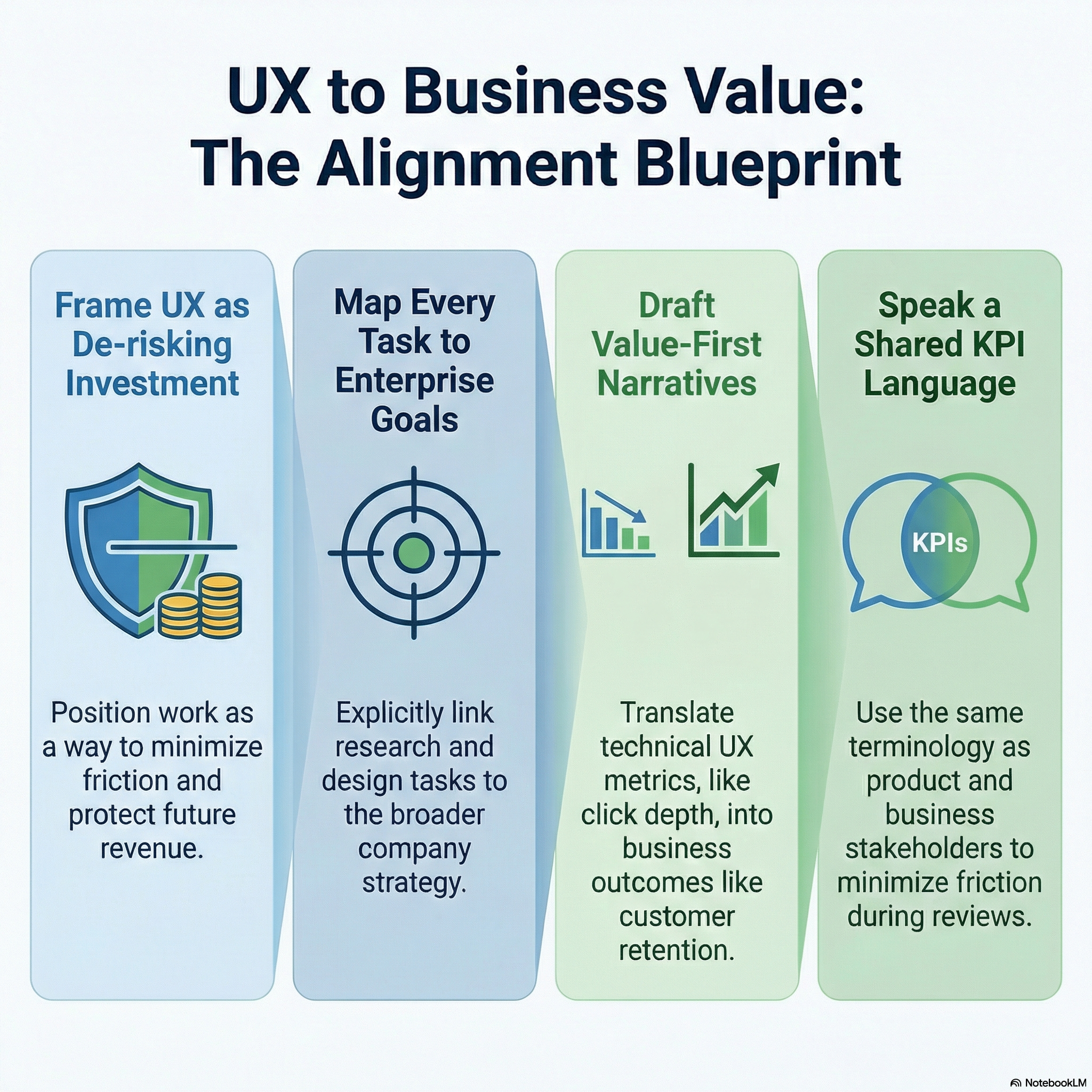
To solve this, I designed a scalable ecosystem to create a shared vocabulary between those executing the work and those directing it, helping to standardize how UX impact is measured, reported and celebrated across the organization.
Leadership Objectives
Coaching the North Star
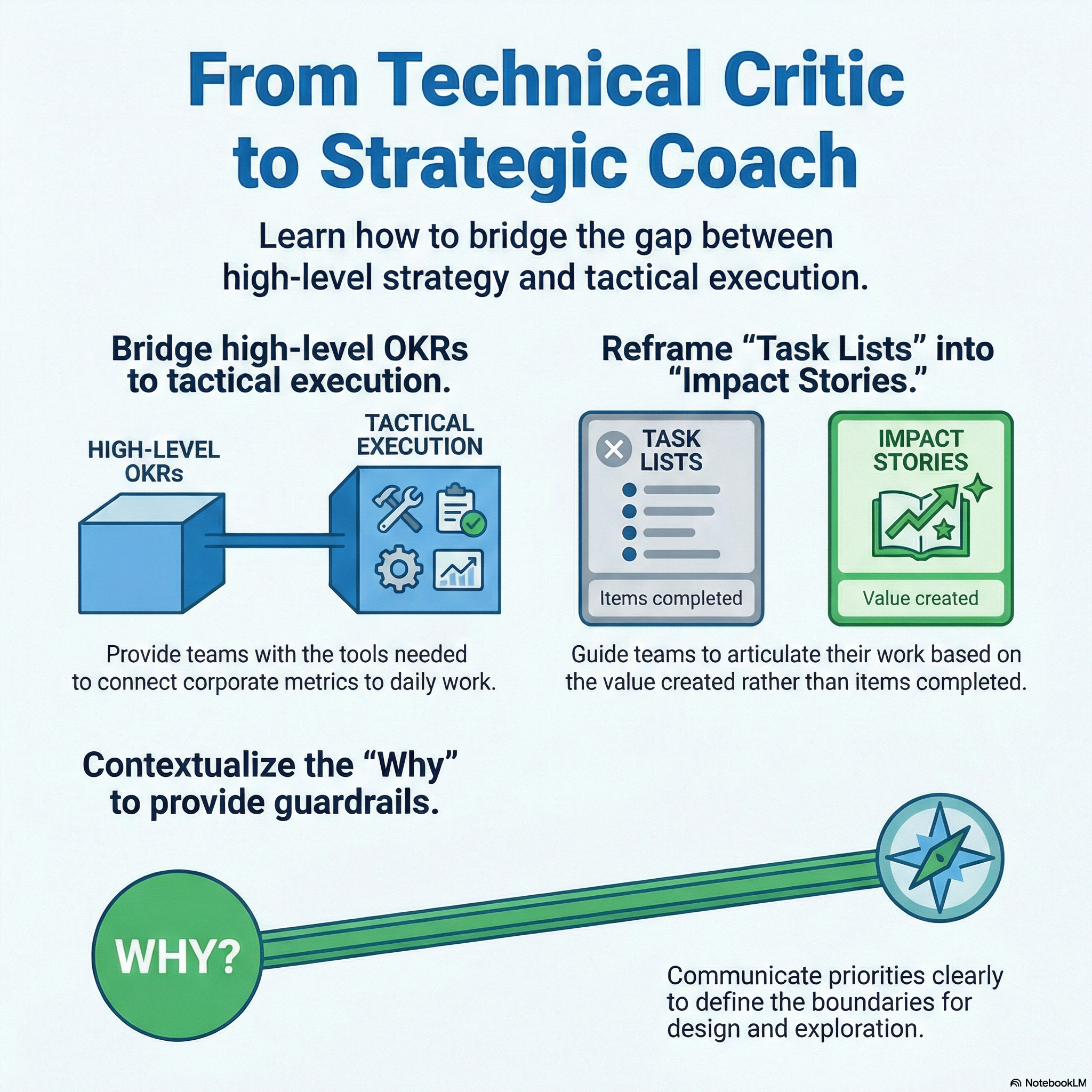
Line of Sight Architecture
A scaffolded, interactive, and participatory experience that moved the needle from theory to application.
The Why
Establishing the stakes. What happens to business value when UX is bad? What’s the risk? We explored the cost to serve and how UX maturity creates a seat at the table.
Metric Alignment
Leaders and ICs collaborated to eliminate distractions. While ICs brainstormed metrics, leaders filtered them down to the core pillars of their specific product domain, ensuring everyone was aiming at a set of similar targets.
Individual Contributor Cheatsheet
“As a UX Manager, this provides me a lens to how my team members can speak to the value of their work and how they can better communicate it to their partners.”
-UX Manager
Impact Mapping
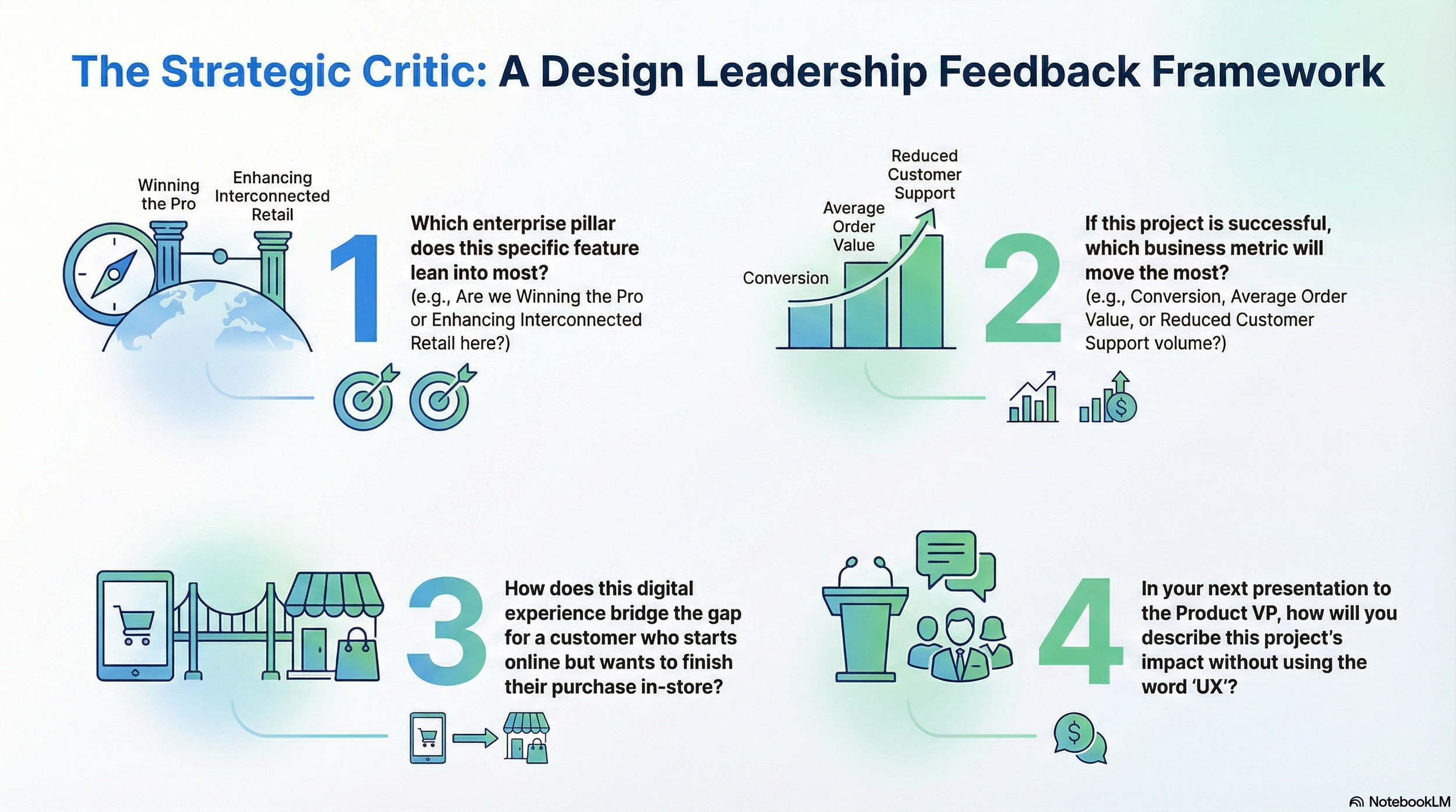
Using a custom framework (based on the 5 Why’s) associates mapped their daily work all the way to the end customer, while leaders provided real-time feedback with a toolkit of pre-written prompts to encourage critical thinking and further refinement. This resulted in a concise narrative connecting a task to a THD goal.
Implementing the Line of Sight
We concluded each workshop a variety of approaches to reflection and action. One of the most popular approaches was for each associate to identify a high-priority project on their current roadmap and define one specific way they could apply the “Line of Sight” mapping framework within the next sprint. By anchoring the learning in their immediate workload, we move the needle from theoretical understanding to further application and implementation.
Upon closing of the workshops I provided adaptable cheatsheets to both ICs and Leadership to reference in the future, so the learning could continue to be sticky and incorporated into daily work.
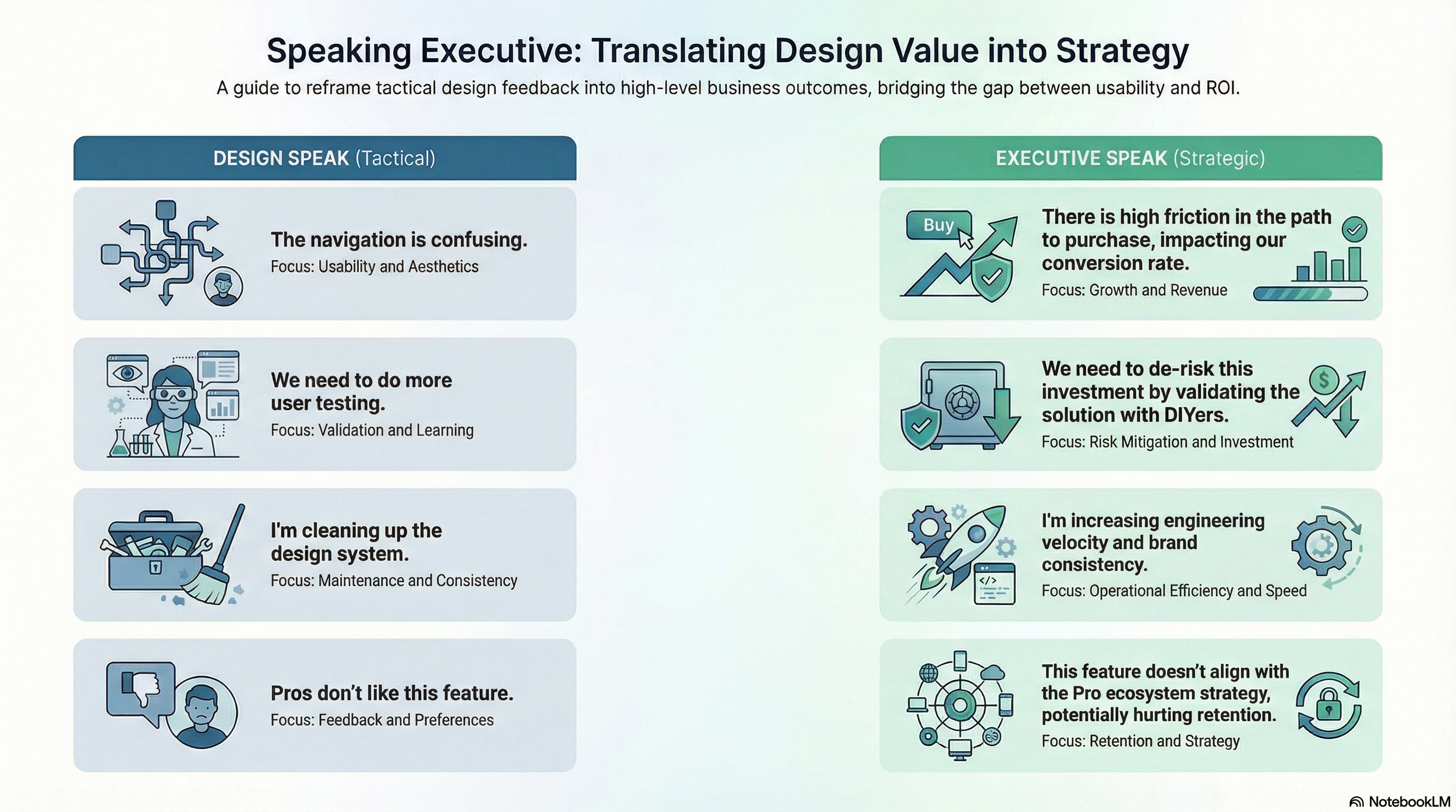
Leadership Cheatsheet
Stakeholder Pressure Test
In breakout rooms, groups took their narratives and collaboratively translated them for different audiences (e.g. how to pitch a design system change to a VP of Finance vs. a Product Manager).
“I have an important readout next week and I already have plans on how I’m going to improve my storytelling and make it more impactful using this framework.”
-Sr. UX Designer
Research-led Agility: The Feedback Loop
Research is at its best when used as a compass, instead of a scoreboard.
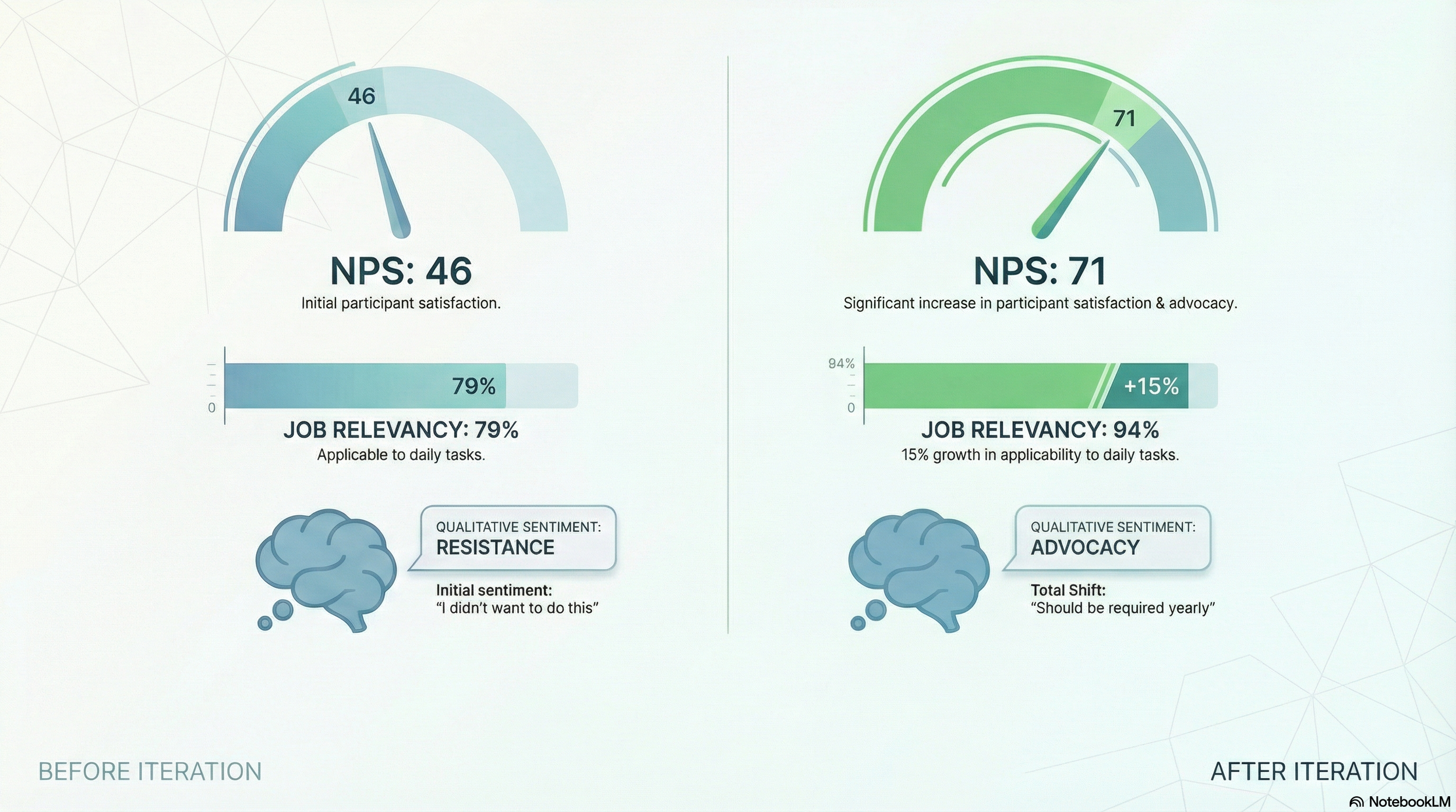
By treating the 16-squad rollout as an agile evolution rather than an event, I leaned into the evaluative feedback loop after just three sessions. I synthesized qualitative friction points with quantitative data, then facilitated a collaborative sprint with my UX team to identify high-value, low effort iterations.
We saw a significant positive transformation in attitudes and perceived value following our shift. There was a substantial increase in advocacy as measured by a 25-point jump in the Net Promotor Score. Participants also reported that the training felt far more applicable and relevant to their roles, with relevancy ratings climbing to a near total consensus at 94%.
The qualitative feedback evolved from resistance to a desire for the workshop to become an mandatory annual fixture.
“One of the best workshops I’ve taken at The Home Depot. Understanding how your day-to-day work fits into the larger picture unlocks a lot of growth potential moving forward!”
- UX Designer II
Key Takeaways
Agility is the Ultimate Multiplier: By iterating mid-rollout, we proved that “low-effort, high-value” tweaks based on early feedback can exponentially increase the ROI of a long-term project.
Strategic Rostering Matters: Success wasn’t just in the content and activities, it was about the context too. Rostering by squads/pods ensured that the thread was relevant to everyone in the room.
The Alignment Gap is a Strategic Opportunity: The workshops acted as a diagnostic tool, revealing real-time gaps in team alignment that allowed leaders to step in and provide much-needed clarity.
Scalability is in the Framework: Because the framework was built to be adaptable, it’s no longer just a UX tool-it’s a blueprint for any group anywhere to define their value criteria, tell higher impact stories and form OKRs with clarity.